Ovarian Cysts are a common Gynecological condition seen in women of different age groups, from teenage years to after menopause. In most cases, ovarian cysts are harmless and disappear on their own without any medical treatment. However, some cysts may grow larger, cause pain, or lead to serious complications. This often makes women anxious and leads to an important question: when does Ovarian Cyst need Surgery?
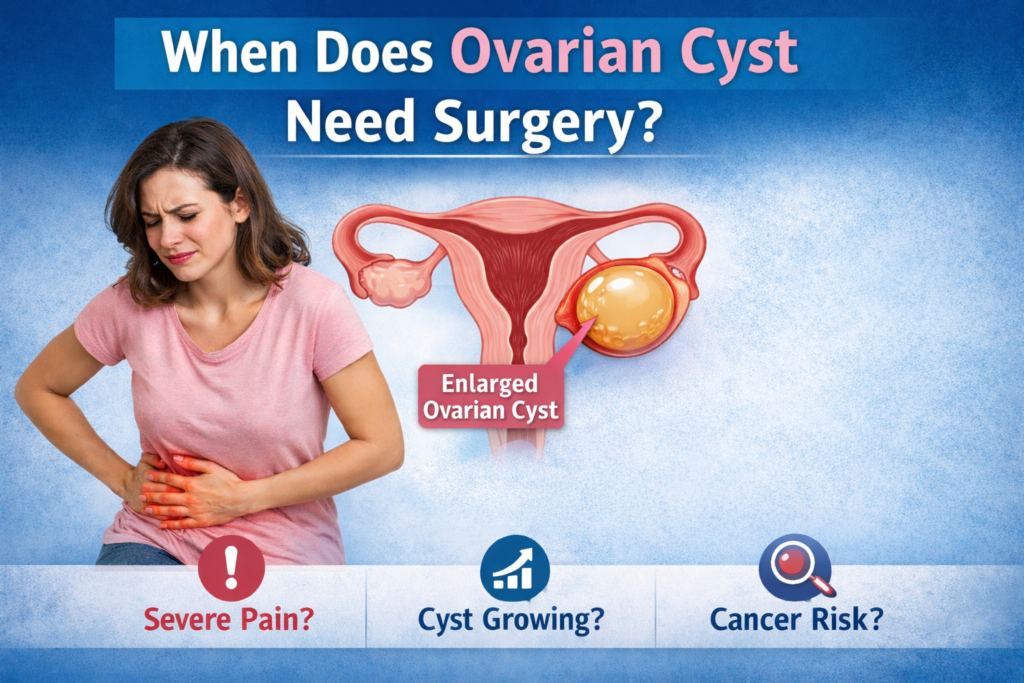
Understanding when surgery is actually required helps women take timely action while also avoiding unnecessary fear or procedures. In this article, we explain in simple and clear language when ovarian cyst surgery becomes necessary, what warning signs should not be ignored, and how doctors decide the best treatment approach.
What Is an Ovarian Cyst?
An Ovarian cyst is a fluid-filled sac that forms on or inside an ovary. Many cysts develop as part of the normal menstrual cycle and are called Functional Ovarian Cysts. These usually disappear on their own within a few weeks or months.
There are also other types of ovarian cysts, such as dermoid cysts, endometriomas, or cysts related to hormonal imbalance. While many of these are benign, some may require closer monitoring or treatment.
Do All Ovarian Cysts Need Surgery?
No. Most ovarian cysts do not need surgery.
Doctors usually recommend a “wait and watch” approach if:
- The cyst is small in size
- There are no severe symptoms
- Ultrasound findings suggest a benign cyst
- Periods are relatively regular
Regular follow-up scans help doctors track whether the cyst is shrinking, stable, or growing.
When Does Ovarian Cyst Need Surgery?
Surgery is advised only in specific situations where the Cyst poses a health risk or affects quality of life.
- Large Ovarian Cyst Size
One of the most common reasons for surgery is large Cyst size. If a cyst grows beyond 5 to 6 cm and does not reduce over time, surgery may be recommended.
Large cysts can:
- Press on nearby organs
- Increase abdominal discomfort
- Increase the risk of rupture or torsion
Doctors assess cyst size along with symptoms before advising surgery.
- Persistent or Severe Pelvic Pain
Ongoing pelvic pain is an important warning sign. Pain may be:
- Constant or recurring
- Felt on one side of the lower abdomen
- Worse during movement or intercourse
If pain does not improve with medicines or lifestyle changes, surgical treatment may be required to relieve symptoms and prevent complications.
- Ovarian Torsion (Twisting of the Ovary)
Sometimes, an ovarian cyst causes the ovary to twist around its blood supply. This condition is known as ovarian torsion and is a medical emergency.
Symptoms include-
- Sudden severe abdominal pain
- Nausea or vomiting
- Fever in some cases
Immediate surgery is needed to restore blood flow and prevent permanent damage to the ovary.
5. Ruptured Ovarian Cyst
An ovarian cyst can rupture suddenly, causing:
- Sharp abdominal pain
- Internal bleeding
- Weakness or dizziness
Mild ruptures may be managed with observation, but severe rupture often requires surgery, especially if bleeding is significant.
6. Cyst That Does Not Go Away
Functional cysts usually resolve within 2-3 menstrual cycles.
If a cyst:
- Persists for many months
- Continues to grow
- Keeps causing symptoms
Doctors may suggest surgical removal to avoid future complications.
7. Suspicion of Malignancy
If ultrasound or scans show concerning features such as:
- Solid areas inside the cyst
- Thick walls or irregular borders
- Rapid increase in size
Surgery is recommended to confirm the diagnosis and ensure timely treatment. Early evaluation is especially important in postmenopausal women.
8. Fertility Problems Linked to Ovarian Cysts
Some ovarian cysts interfere with ovulation or egg quality. Women trying to conceive may face difficulty due to:
- Hormonal imbalance
- Mechanical obstruction
- Repeated cyst formation
If fertility is affected and conservative treatment fails, surgery may be advised to preserve reproductive health.
Ovarian Cyst Size and Surgery- A Simple Guide
| Cyst Size | Usual Management |
| Less than 4 cm | Observation |
| 4-6 cm | Monitoring + symptoms assessment |
| More than 6 cm | Surgery often recommended |
Decision always depends on symptoms and scan findings.
Types of Ovarian Cyst Surgery
The type of surgery depends on cyst size, nature, and patient factors.
Laparoscopic Ovarian Cystectomy
- Minimally invasive
- Small incisions
- Faster recovery
- Less postoperative pain
Open Surgery (Laparotomy)
- Used for very large or complex cysts
Oophorectomy
- Removal of the ovary
- Done only when necessary
When surgery is advised, Ovarian Cyst Surgery in Delhi is commonly performed using minimally invasive techniques for better recovery and safety.
How Doctors Decide If Surgery Is Needed
Doctors consider multiple factors, including:
- Ultrasound and imaging results
- Cyst size and appearance
- Severity of symptoms
- Age and menstrual history
- Pregnancy plans
Blood tests and repeat scans may be done before confirming surgery.
Can Ovarian Cysts Be Treated Without Surgery?
Yes. Many cysts respond well to:
- Regular monitoring
- Hormonal medicines
- Lifestyle changes such as weight control and stress management
Surgery is recommended only when these options are not effective or complications arise.
Recovery After Ovarian Cyst Surgery
Recovery depends on the surgical approach:
- Laparoscopic surgery: 1 to 2 weeks
- Open surgery: 4 to 6 weeks
Most women can return to daily activities quickly after minimally invasive surgery.
When Should You Consult a Doctor?
Medical evaluation is advised if you notice:
- Persistent pelvic pain
- Sudden severe abdominal pain
- Irregular or absent periods
- Difficulty getting pregnant
- Rapid abdominal swelling
Early diagnosis helps prevent serious complications.
Final Conclusion
So, when does ovarian cyst need surgery?
Surgery is required only when an ovarian cyst becomes large, painful, persistent, complicated, or suspicious. Most ovarian cysts are harmless and resolve naturally, but ignoring warning signs can increase health risks.With timely diagnosis, proper monitoring, and expert guidance, ovarian cysts can be managed safely while protecting fertility and overall well-being.
If surgical treatment is required, Ovarian Cyst Surgery in Delhi using advanced minimally invasive techniques offers effective outcomes with faster recovery.
