Many women delay Gynaecological Cancer Screening because they feel healthy or believe symptoms are a normal part of hormonal changes. However, some signs should never be ignored, even if they appear mild or occasional. Gynaecological Cancers often develop silently, and early warning signs are easy to miss or misinterpret.
Understanding the Signs that should not be ignored before Gynae Cancer Screening can help women seek timely medical evaluation and avoid potential complications.
Why Paying Attention to Early Signs Is Important
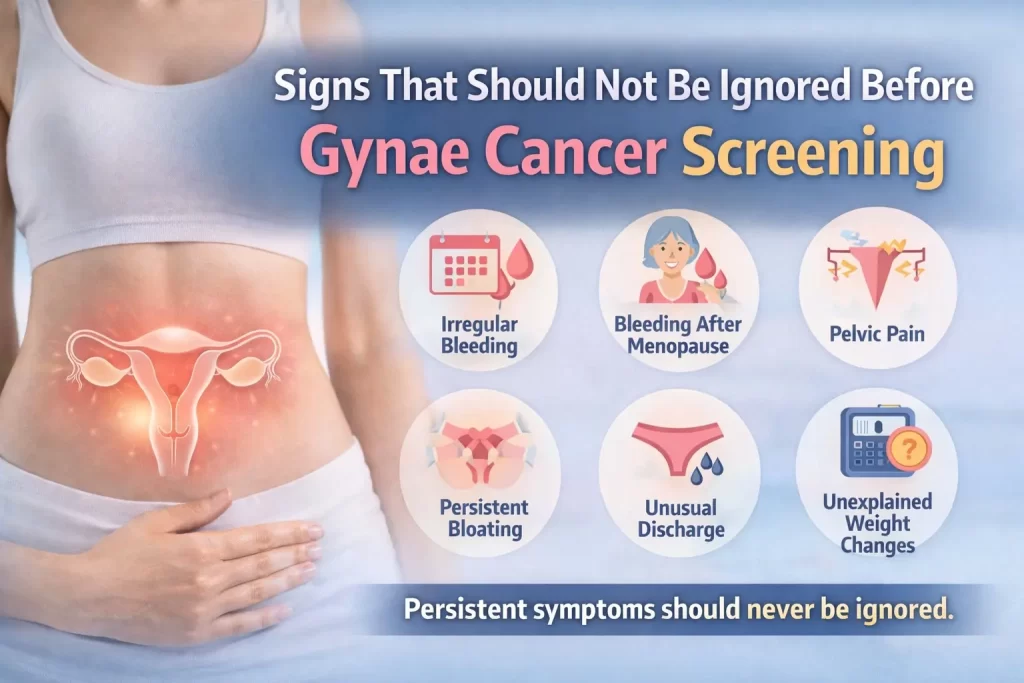
Gynaecological Cancers, including cervical, ovarian, and uterine cancers, may not show obvious symptoms in the early stages. When symptoms do appear, they are often subtle and mistaken for common Gynaecological problems.
Early medical evaluation helps to:
- Identify abnormal changes early
- Rule out serious conditions
- Guide appropriate screening tests
- Support better long-term health outcomes
Ignoring symptoms does not make them disappear; it only delays clarity.
1. Irregular Vaginal Bleeding
Irregular bleeding is one of the most important signs that should not be ignored.
This includes:
- Bleeding Between Periods
- Very Heavy Menstrual Bleeding
- Bleeding after sexual intercourse
- Bleeding after menopause
While hormonal imbalance or infections can cause abnormal bleeding, persistent or unexplained bleeding requires evaluation, as it may be linked to cervical or uterine conditions.
2. Bleeding After Menopause
Any vaginal bleeding after menopause is considered abnormal.
Even light spotting should not be ignored because:
- Menopause marks the end of normal menstrual bleeding
- Postmenopausal bleeding may indicate uterine lining changes
- Early evaluation helps rule out serious causes
This symptom always requires prompt medical attention and appropriate screening.
3. Persistent Pelvic or Lower Abdominal Pain
Occasional pelvic discomfort may be common, but persistent or unexplained pain is not normal.
Warning signs include:
- Pain that lasts for weeks
- Pain unrelated to periods
- Pain that worsens over time
Persistent pelvic pain may be linked to ovarian or uterine conditions and should be evaluated before delaying screening.
4. Bloating or Abdominal Fullness That Does Not Go Away
Frequent bloating is often ignored or linked to digestion, but ongoing abdominal bloating may signal an underlying issue.
Be cautious if bloating-
- Occurs almost daily
- Does not improve with diet changes
- Is associated with pelvic discomfort or appetite changes
Chronic bloating can sometimes be associated with Ovarian health issues and deserves medical evaluation.
5. Changes in Menstrual Cycle Patterns
Menstrual changes that should not be ignored include:
- Periods becoming very irregular
- Periods stopping suddenly (not due to Pregnancy or menopause)
- Extremely painful periods that are new
While stress and hormonal imbalance can affect cycles, consistent changes may need further assessment.
6. Pain During or After Intercourse
Pain during Sexual Intercourse (dyspareunia) is not normal and should not be overlooked.
Possible warning signs include-
- Deep pelvic pain during intercourse
- Pain followed by spotting or bleeding
- New discomfort when intercourse was previously painless
This symptom may be linked to cervical or pelvic conditions and warrants timely evaluation.
7. Unusual Vaginal Discharge
Changes in vaginal discharge can occur for many reasons, but some changes require attention.
Warning signs include-
- Foul-smelling discharge
- Watery or blood-stained discharge
- Discharge that persists despite treatment
Unusual discharge, especially when combined with other symptoms, should be evaluated as part of screening.
8. Frequent Urination or Difficulty Emptying the Bladder
Changes in bladder habits can sometimes be linked to pelvic conditions.
Be alert if you notice:
- Frequent urge to urinate without infection
- Difficulty fully emptying the bladder
- Pressure in the lower abdomen
These symptoms may occur when pelvic organs are affected and should not be ignored.
9. Sudden, Unexplained Weight Changes
Unexpected weight changes may reflect underlying health concerns.
Examples include-
- Unexplained weight loss
- Sudden weight gain with bloating
- Loss of appetite without clear reason
While weight changes can be due to lifestyle or hormonal factors, persistent unexplained changes should be discussed with a healthcare provider.
10. Fatigue That Does Not Improve With Rest
Ongoing fatigue that interferes with daily activities should not be dismissed as stress alone.
Concerning signs include-
- Fatigue lasting several weeks
- Weakness without clear cause
- Fatigue associated with other symptoms like pain or bleeding
Chronic fatigue can sometimes be linked to systemic health issues and deserves evaluation.
Are These Symptoms Always Cancer?
No.
Most of these symptoms are caused by non-cancerous conditions such as infections, hormonal imbalance, fibroids, or benign cysts.
However-
- Only proper evaluation can determine the cause
- Screening helps rule out serious conditions
- Early attention reduces anxiety and uncertainty
Ignoring symptoms increases the risk of delayed diagnosis.
When Should Women Seek Gynae Cancer Screening Based on Symptoms?
Women should consider screening or evaluation if-
- Symptoms persist for more than 2-3 weeks
- Symptoms worsen over time
- Multiple symptoms appear together
- Symptoms occur after menopause
Listening to your body is an important part of preventive care.
The Role of Screening in Clarifying Symptoms
Gynaecological cancer screening may include-
- Cervical screening tests
- Ultrasound imaging
- Blood tests (when advised)
These Tests help doctors understand whether symptoms are due to benign conditions or require further investigation.
Emotional Barriers That Delay Screening
Many women delay screening due to
- Fear of diagnosis
- Embarrassment
- Busy schedules
- Belief that symptoms are “normal”
Addressing symptoms early often leads to reassurance rather than bad news.
Supporting Your Health Through Awareness
Being aware of warning signs does not mean assuming the worst. It means:
- Being informed
- Acting Responsibly
- Seeking clarity instead of guessing
Early evaluation supports both physical and emotional well-being.
Final Takeaway
Recognizing the signs that should not be ignored before Gynae Cancer Screening is a vital step in women’s healthcare. While many symptoms have harmless causes, persistent or unusual changes deserve attention.
Regular screening, timely evaluation, and open communication with a healthcare provider help women protect their long-term health and peace of mind.
Being proactive today can prevent uncertainty tomorrow.
