Gynecological surgery has evolved significantly over the years. Today, minimally invasive techniques like robotic surgery and laparoscopic surgery have replaced many traditional open procedures. Both options offer benefits such as smaller incisions, faster recovery, and less pain.
However, many women often wonder-
Robotic vs laparoscopic Surgery in Gynecology, Which is Better?
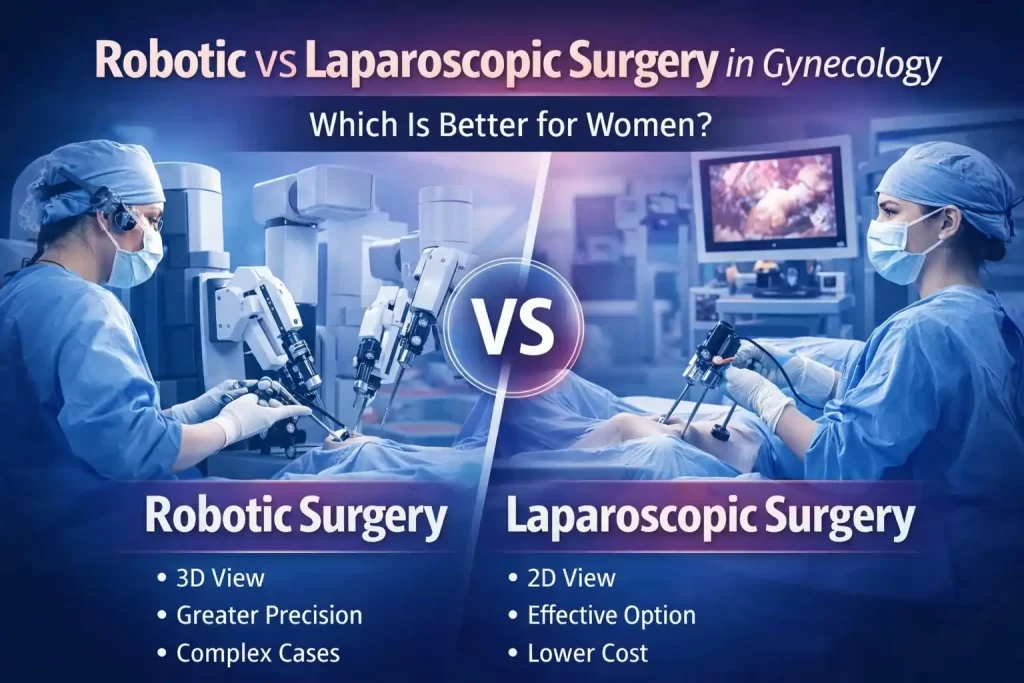
This article explains the key differences, benefits, and limitations of both approaches to help women understand their options clearly.
What Is Laparoscopic Surgery in Gynecology?
Laparoscopic surgery is a minimally invasive technique where surgery is performed through small incisions using a camera and long surgical instruments. The surgeon operates while viewing a 2D image on a monitor.
Laparoscopic gynecological surgery is commonly used for-
- Hysterectomy
- Ovarian cyst removal
- Fibroid surgery
- Endometriosis treatment
It has been widely used for many years and is considered a standard minimally invasive option.
What Is Robotic Surgery in Gynecology?
Robotic surgery is an advanced form of minimally invasive surgery. It uses a robotic system that the surgeon controls from a console. The robotic arms translate the surgeon’s movements into highly precise actions inside the body.
Robotic Gynecological surgery is often used for-
- Complex hysterectomy
- Large fibroids
- Severe endometriosis
- Repeat or complicated pelvic surgeries
The system provides 3D high-definition vision and enhanced instrument flexibility.
Robotic vs Laparoscopic Surgery- Key Differences
1. Precision and Control
- Robotic Surgery- Offers greater precision with flexible instruments and stable movements, especially helpful in complex cases.
- Laparoscopic Surgery– Provides good control but is limited by straight instruments and hand movement restrictions.
Better option- Robotic surgery for complex gynecological conditions.
2. Visualization During Surgery
- Robotic Surgery- Provides a magnified 3D view, allowing better visibility of delicate pelvic structures.
- Laparoscopic Surgery- Uses a 2D camera view, which may limit depth perception.
Better option- Robotic surgery for detailed and deep pelvic procedures.
3. Incisions, Pain, and Scarring
Both techniques use small incisions, which means-
- Less pain
- Minimal scarring
- Faster wound healing
However, robotic surgery often involves more precise tissue handling, which may further reduce discomfort.
Better option- Both are similar, with a slight advantage for robotic surgery in certain cases.
4. Recovery Time
- Robotic Surgery- Many patients experience quicker recovery and return to daily activities sooner.
- Laparoscopic Surgery- Recovery is also fast, but may take slightly longer in complex surgeries.
Better option- Robotic surgery for faster recovery in complex procedures.
5. Blood Loss and Surgical Safety
- Robotic Surgery- Enhanced precision helps reduce blood loss during surgery.
- Laparoscopic Surgery- Generally safe, but blood loss may be higher in difficult cases.
Better option- Robotic surgery, especially for larger fibroids or extensive endometriosis.
6. Suitability for Complex Gynecological Conditions
Robotic surgery is particularly useful for-
- Large or multiple fibroids
- Deep endometriosis
- Obese patients
- Previous abdominal surgeries
Laparoscopic surgery works well for-
- Simple ovarian cysts
- Smaller fibroids
- Less complex gynecological conditions
7. Cost Consideration
- Robotic Surgery- Usually more expensive due to advanced technology.
- Laparoscopic Surgery- More affordable and widely available.
Cost can be an important factor when choosing between the two options.
Comparison Table- Robotic vs Laparoscopic Surgery in Gynecology
| Feature | Robotic Surgery | Laparoscopic Surgery |
| Precision | Very high | Moderate |
| Visualization | 3D HD view | 2D view |
| Recovery | Faster | Fast |
| Blood Loss | Less | Slightly more |
| Best for Complex Cases | Yes | Limited |
| Cost | Higher | Lower |
Which Is Better for Women?
There is no one-size-fits-all answer.
The better option depends on-
- Type of gynecological condition
- Complexity of surgery
- Overall health
- Surgical goals
For simple procedures, laparoscopic surgery may be sufficient.
For complex or high-risk cases, robotic gynecological surgery often provides better precision, safety, and recovery benefits.
Conclusion
Both robotic and laparoscopic surgeries have improved gynecological care by offering minimally invasive solutions. While laparoscopic surgery remains an effective option for many conditions, robotic surgery offers advanced advantages in precision, visualization, and recovery especially for complex gynecological procedures.
Understanding the differences helps women make informed decisions about their surgical options.
Frequently Asked Questions (FAQs)
Is robotic surgery better than laparoscopic surgery in gynecology?
Robotic surgery offers greater precision and better visualization, which can be beneficial in complex gynecological cases.
Which surgery has faster recovery time?
Both have quick recovery, but robotic surgery may allow faster healing in complex procedures.
Is laparoscopic surgery still safe?
Yes, laparoscopic surgery is a safe and widely used option for many gynecological conditions.
Does robotic surgery cause less pain?
Robotic surgery often results in less post-operative pain due to precise tissue handling.
Which option is more affordable?
Laparoscopic surgery is generally more affordable than Robotic Surgery.
