Understanding Ovarian Cysts & Symptoms
Ovarian cysts are one of the most common Gynaecological findings in women of different age groups. Many women discover ovarian cysts during routine pelvic examinations or ultrasound scans, often without experiencing any symptoms. While most ovarian cysts are harmless and resolve on their own, some cysts may grow larger, persist over time, or cause discomfort, leading doctors to consider ovarian cyst surgery as part of treatment.

Understanding what ovarian cysts are, how they develop, and when they become a medical concern is the first step toward informed decision-making. This pillar guide explains ovarian cyst surgery in depth, covering symptoms, diagnosis, treatment options, and recovery in a clear and patient-friendly manner.
What Is an Ovarian Cyst?
An ovarian cyst is a fluid-filled or semi-solid sac that develops on or inside an ovary. Ovaries are part of the female reproductive system and play a key role in hormone production and egg release.
Most ovarian cysts are benign and form as a natural part of the menstrual cycle. These cysts often disappear without treatment within a few weeks or months. However, certain cysts may persist, increase in size, or cause symptoms that require medical evaluation and, in selected cases, surgical management.
How Common Are Ovarian Cysts?
Ovarian cysts are extremely common, especially in women of reproductive age. Many women may develop ovarian cysts at some point in their lives without even knowing it.
Key points about prevalence:
- Most ovarian cysts are non-cancerous
- Many cysts resolve on their own
- Only a small percentage require surgery
- Risk increases with age and certain health conditions
Because ovarian cysts are common, finding one does not automatically mean surgery is required.
Types of Ovarian Cysts
Understanding the Types of Ovarian Cysts helps explain why some cysts are managed conservatively while others may need surgery.
Functional Ovarian Cysts
These are the most common and are linked to the menstrual cycle.
- Follicular cysts
- Corpus luteum cysts
Functional cysts usually disappear on their own.
Complex Ovarian Cysts
Complex cysts contain solid areas, thick walls, or internal structures. These cysts require closer monitoring and may need surgical evaluation.
Examples include:
- Dermoid cysts
- Endometriomas
- Cystadenomas
Complex ovarian cysts are more likely to be considered for Ovarian cyst surgery depending on size and symptoms.
Endometriomas
These cysts develop in women with endometriosis and may cause chronic pelvic pain. surgical treatment for ovarian cysts may be considered if symptoms are severe or persistent.
Symptoms of Ovarian Cysts
Many ovarian cysts are asymptomatic. However, symptoms can develop when cysts grow larger, rupture, or twist.
Common Symptoms Include:
- Dull or sharp pelvic pain
- Pain on one side of the lower abdomen
- Abdominal bloating or fullness
- Pain during menstruation
- Pain during sexual intercourse
- Irregular menstrual cycles
Sudden or Severe Symptoms
Certain symptoms require immediate medical attention:
- Sudden, intense pelvic pain
- Pain accompanied by fever or vomiting
- Signs of internal bleeding
- Dizziness or fainting
These symptoms may indicate complications such as Cyst rupture or Ovarian torsion.
Why Symptoms Should Not Be Ignored
Ignoring persistent ovarian cyst symptoms can increase the risk of complications. While many cysts are harmless, ongoing pain or changes in menstrual patterns should be evaluated to rule out underlying issues.
Early assessment allows-
- Timely diagnosis
- Symptom relief
- Prevention of complications
- Appropriate treatment planning
When Does an Ovarian Cyst Become a Medical Concern?
An Ovarian cyst becomes a concern when it:
- Persists over several menstrual cycles
- Grows larger in size
- Causes continuous pain
- Shows complex features on imaging
- Occurs after menopause
These factors often prompt further diagnostic testing and discussion about Ovarian cyst surgery.
Key Warning Signs
- Increasing cyst size
- Worsening pelvic pain
- Changes in menstrual pattern
- Pressure on bladder or bowel
Such signs indicate the need for specialist evaluation.
Diagnosis, Evaluation, and Decision for Surgery

Once an ovarian cyst is detected, the most important step is not rushing into treatment, but understanding the nature of the cyst. Many women assume that the presence of a cyst automatically means surgery, but in reality, most ovarian cysts do not require surgical intervention. This is why a careful and step-by-step diagnostic process is essential before any treatment decision is made.
Doctors focus on identifying whether the cyst is likely to resolve on its own or whether it carries risks that make ovarian cyst surgery a safer option.
Clinical Evaluation: The First Step in Diagnosis
The diagnostic journey usually begins with a detailed clinical consultation. During this stage, the doctor tries to understand the complete picture rather than focusing only on the cyst.
This includes discussing symptoms such as pelvic pain, bloating, menstrual irregularities, or discomfort during physical activity. Menstrual history is important because many functional cysts are linked to the normal ovulation process. Past surgeries, hormonal treatments, fertility plans, and family medical history are also reviewed carefully.
A pelvic examination may help identify tenderness or enlargement, but imaging is needed to confirm the diagnosis.
Role of Pelvic Ultrasound in Ovarian Cyst Evaluation
A pelvic ultrasound is the most reliable and commonly used tool to evaluate ovarian cysts. It helps doctors visualise the ovaries and understand the internal structure of the cyst.
Through ultrasound, doctors assess whether the cyst is:
- Simple and fluid-filled
- Complex with internal solid areas
- Thick-walled or irregular
- Large or increasing in size
These pelvic ultrasound findings are central to deciding whether observation is sufficient or further evaluation is needed.
For example, a small, thin-walled cyst with clear fluid is usually considered low risk and is often monitored. In contrast, a cyst with solid components or irregular borders may require closer attention.
When Additional Imaging Is Needed
In certain situations, ultrasound alone may not provide enough clarity. This is especially true when cysts appear complex or when the patient has persistent symptoms that are not well explained by ultrasound findings.
In such cases, doctors may recommend an MRI scan. MRI offers better soft-tissue contrast and helps differentiate between benign and potentially concerning cysts. CT scans are generally reserved for cases where complications such as rupture or spread are suspected.
These advanced imaging tools are used selectively, not routinely.
Blood Tests and Risk Assessment
Blood tests may be part of the evaluation, particularly in post-menopausal women or when imaging raises concern. These tests do not diagnose ovarian cancer on their own but help in risk assessment.
It is important to understand that blood test results are interpreted alongside imaging and clinical findings. A single abnormal value does not automatically mean surgery but contributes to the overall decision-making process.
How Doctors Decide Whether Surgery Is Necessary
The decision to proceed with ovarian cyst surgery is based on a combination of factors rather than a single test result. Doctors consider how the cyst behaves over time and how it affects the patient’s quality of life.
Surgery may be recommended when a cyst:
- Persists over multiple menstrual cycles
- Continues to grow in size
- Causes ongoing or severe pelvic pain
- Shows complex features on imaging
- Poses a risk of twisting (ovarian torsion)
- Ruptures and causes internal bleeding
- Appears after menopause
This approach ensures that surgery is reserved for situations where the benefits clearly outweigh the risks.
Importance of Monitoring Before Surgery
In many cases, doctors choose careful observation instead of immediate surgery. This involves repeat ultrasounds at regular intervals to track changes in cyst size and appearance.
If a cyst remains stable or reduces in size, surgery can often be avoided. This conservative approach helps protect ovarian function and avoids unnecessary procedures.
Types of Ovarian Cyst Surgery: Explained in Detail
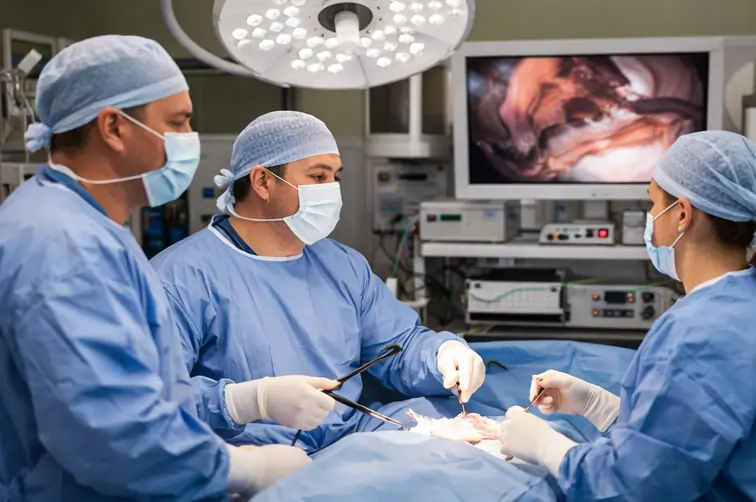
When surgery becomes necessary, the next step is selecting the most appropriate surgical method. This decision is tailored to each patient.
Laparoscopic Ovarian Cyst Removal
Laparoscopic ovarian cyst removal is the most commonly used technique for benign ovarian cysts. It involves making small incisions in the abdomen through which a camera and surgical instruments are inserted.
This method allows precise removal of the cyst while preserving healthy ovarian tissue whenever possible. Because the incisions are small, patients usually experience less pain and recover faster.
Open Ovarian Cyst Surgery
Open surgery may be required when cysts are very large, when there are extensive internal adhesions, or when imaging raises concern for malignancy. Although recovery may take longer, this approach provides better access and visibility in complex cases.
The choice of open surgery does not mean a worse outcome; it simply reflects the need for a safer surgical approach in specific situations.
Ovarian Cystectomy vs Removal of the Ovary
A key goal of surgery is to preserve ovarian function, especially in younger women. An ovarian cystectomy involves removing only the cyst and leaving the ovary intact. This is preferred whenever possible.
Removal of the entire ovary may be considered if the cyst has completely replaced normal ovarian tissue or if there is concern about the nature of the cyst. This decision is made carefully after discussion with the patient.
Fertility Considerations During Surgical Planning
For women who wish to conceive in the future, fertility preservation is a major consideration. Surgical planning focuses on minimising damage to ovarian tissue and maintaining hormonal balance.
Doctors discuss fertility-related concerns before surgery so that patients understand how treatment may affect future reproductive plans.
Why Individualised Decision-Making Matters
No two ovarian cysts are exactly the same. The safest and most effective treatment depends on:
- Age
- Symptoms
- Imaging findings
- Overall health
- Fertility goals
This is why gynaecological evaluation for ovarian cysts is essential before deciding on surgery.
Fertility, Risks, Recovery, Life After Surgery
Once the diagnosis is complete and the need for surgery has been established, most women naturally have questions about recovery, long-term health, fertility, and life after ovarian cyst surgery. Understanding these aspects helps reduce anxiety and prepares patients for a smoother post-surgical journey.
Fertility After Ovarian Cyst Surgery
One of the most common concerns among women undergoing ovarian cyst surgery is whether the procedure will affect their ability to conceive in the future. The impact on fertility largely depends on the type of cyst, the extent of surgery, and how much healthy ovarian tissue is preserved.
In many cases, especially when a cystectomy is performed, fertility is preserved. Surgeons aim to remove only the cyst while protecting normal ovarian tissue. This is particularly important for women of reproductive age or those planning pregnancy.
For women with conditions such as endometriomas, fertility discussions become even more important. Surgical planning is done carefully to balance symptom relief with preservation of ovarian function.
Can Ovarian Cyst Surgery Improve Fertility?
In some situations, ovarian cyst surgery may actually improve fertility. Large cysts or cysts associated with endometriosis can interfere with ovulation or cause pelvic inflammation. Removing these cysts may help restore normal ovarian function and improve the chances of conception.
However, every case is different. Fertility outcomes depend on multiple factors, including age, ovarian reserve, and underlying conditions.
Risks and Complications of Ovarian Cyst Surgery
Like all surgical procedures, ovarian cyst surgery carries certain risks. These risks are generally low but are important to understand.
Possible risks include:
- Bleeding during or after surgery
- Infection
- Injury to surrounding organs
- Formation of adhesions
- Temporary pain or discomfort
In rare cases, complications such as ovarian torsion or recurrence of cysts may occur. These risks are discussed during pre-surgical counselling so that patients can make informed decisions.
Understanding Recovery After Ovarian Cyst Surgery

Recovery is a gradual process and varies depending on the type of surgery performed and individual healing capacity. Most patients are encouraged to focus on rest, gentle movement, and follow-up care during this period.
Immediate Post-Surgery Phase
In the first 24-48 hours after surgery, patients may experience mild to moderate discomfort, bloating, or fatigue. Pain is usually well controlled with prescribed medication.
Early movement, such as short walks, is encouraged to support circulation and reduce stiffness.
Short-Term Recovery (First 2 Weeks)
During the initial weeks at home:
- Physical activity is limited
- Heavy lifting is avoided
- Proper wound care is essential
- Adequate rest and hydration are important
Many women begin to feel significantly better within this period, especially after laparoscopic ovarian cyst removal.
Full Recovery Timeline
| Recovery Phase | What to Expect |
| First week | Rest, mild discomfort, limited activity |
| 2-3 weeks | Gradual return to daily tasks |
| 4-6 weeks | Most patients resume normal routine |
| After 6 weeks | Full recovery in most cases |
Recovery after open surgery may take slightly longer compared to minimally invasive procedures.
Managing Symptoms During Recovery
Some temporary symptoms during recovery may include:
- Mild abdominal swelling
- Occasional pelvic discomfort
- Fatigue
These usually improve with time. Patients are advised to contact their healthcare provider if symptoms worsen or new concerns arise.
Emotional Well-Being After Surgery
Surgery can have emotional as well as physical effects. It is normal for patients to experience mood changes, anxiety, or concerns about future health.
Open communication with healthcare providers, family support, and addressing emotional well-being are important parts of recovery.
Long-Term Care and Follow-Up
Follow-up appointments play a key role in long-term care after ovarian cyst surgery. These visits allow doctors to:
- Monitor healing
- Review pathology results
- Detect any recurrence early
- Address patient concerns
Depending on the cyst type, additional monitoring or lifestyle guidance may be recommended.
Can Ovarian Cysts Return After Surgery?
Recurrence depends on the type of cyst and underlying condition. Functional cysts may recur as part of normal ovarian activity, while cysts linked to conditions such as endometriosis may require long-term management.
Regular follow-up helps identify and manage recurrence early.
Lifestyle Considerations After Ovarian Cyst Surgery
After recovery, maintaining overall reproductive health is important. This may include:
- Balanced nutrition
- Regular physical activity
- Stress management
- Periodic health check-ups
These measures support long-term well-being.
FAQs – People Also Ask
Is ovarian cyst surgery always necessary?
No. Many ovarian cysts resolve without surgery and are managed with observation.
How long does it take to recover from ovarian cyst surgery?
Recovery varies, but most patients recover within 4-6 weeks.
Can ovarian cyst surgery affect menstrual cycles?
Temporary changes may occur, but cycles usually normalise.
Is laparoscopic ovarian cyst removal painful?
Pain is usually mild to moderate and improves quickly.
Can ovarian cysts return after surgery?
Yes, depending on cyst type and underlying causes.
When can normal activities be resumed?
Activities are resumed gradually as advised by the doctor.
Does ovarian cyst surgery affect hormone levels?
Hormone levels are usually unaffected if ovarian tissue is preserved.
Final Conclusion
Ovarian cyst surgery is an effective treatment option for cysts that cause symptoms, persist over time, or pose potential risks. With accurate diagnosis, careful surgical planning, and personalised care, most women recover well and return to normal life.
Understanding the types, symptoms, diagnosis, and recovery process empowers women to make informed decisions and approach treatment with confidence. When managed appropriately, ovarian cyst surgery supports long-term reproductive health and overall quality of life.
