Irregular periods are one of the most common menstrual concerns faced by women of all age groups. While occasional cycle changes can be normal, frequent irregularity may indicate an underlying hormonal or structural issue that requires medical evaluation.
A normal menstrual cycle typically occurs every 21 to 35 days. When periods become unpredictable – arriving too early, too late, skipping months, or lasting unusually long – they are considered irregular.
Understanding the causes of irregular periods and seeking timely treatment can help prevent complications such as anemia, infertility, and chronic hormonal imbalance.
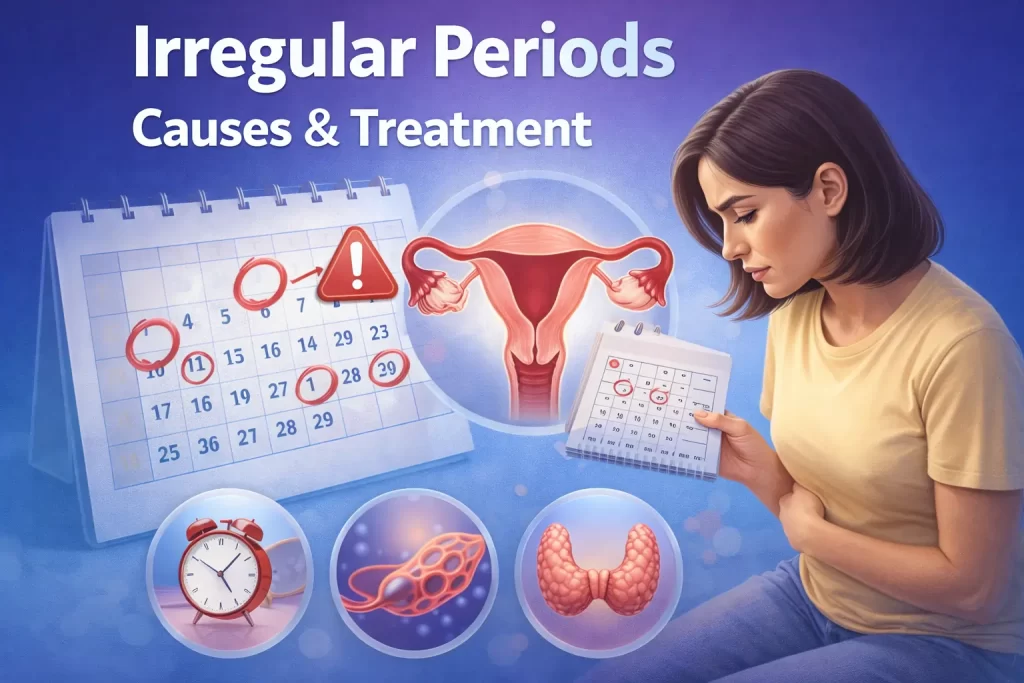
What Are Irregular Periods?
Irregular periods refer to menstrual cycles that:
- Occur less than 21 days apart
- Occur more than 35 days apart
- Skip months entirely
- Last longer than 7 days
- Vary significantly from cycle to cycle
- Include spotting between periods
Occasional irregularity may not be serious, but persistent cycle disturbance should not be ignored.
What Causes Irregular Periods?
Irregular periods usually occur due to disruption in the hormonal balance that regulates ovulation and menstruation. Causes can range from lifestyle factors to medical conditions.
1. Hormonal Imbalance
Hormones such as estrogen and progesterone control the menstrual cycle. When ovulation does not occur regularly, periods can become irregular.
Hormonal imbalance is common during:
- Adolescence
- Perimenopause
- Postpartum period
2. Polycystic Ovary Syndrome (PCOS)
PCOS is one of the most common causes of irregular periods in women of reproductive age.
Women with PCOS may experience:
- Infrequent periods
- Heavy bleeding when periods occur
- Acne and excess facial hair
- Weight gain
- Difficulty conceiving
PCOS affects ovulation, leading to unpredictable cycles.
3. Thyroid Disorders
Both hypothyroidism and hyperthyroidism can disrupt menstrual cycles.
Symptoms may include:
- Fatigue
- Weight changes
- Hair loss
- Irregular or heavy periods
Thyroid hormone plays a critical role in regulating reproductive hormones.
4. Stress and Lifestyle Factors
Chronic stress, excessive exercise, sudden weight loss, or obesity can affect hormonal balance and delay ovulation.
Lifestyle-related irregular periods are often reversible with proper management.
5. Uterine Fibroids or Polyps
Structural problems such as fibroids or polyps may cause irregular bleeding or spotting between periods.
These conditions may also cause heavy bleeding and pelvic discomfort.
6. Endometriosis or Adenomyosis
These conditions can lead to irregular cycles along with pelvic pain and heavy periods.
7. Perimenopause
Women in their 40s may experience irregular periods due to fluctuating hormone levels before menopause.
Cycles may become shorter, longer, heavier, or lighter.
8. Birth Control and Medications
Hormonal contraceptives may cause temporary irregular bleeding, especially during the initial months.
Certain medications can also affect menstrual cycles.
9. Pregnancy
Missed periods are often the first sign of pregnancy. Any sudden absence of menstruation should be evaluated.
When Should Irregular Periods Be a Concern?
You should consult a gynaecologist if:
- Periods are absent for more than 3 months (not pregnant)
- Bleeding occurs between cycles
- Periods are extremely heavy or painful
- You are planning pregnancy
- Irregularity persists for several cycles
Early evaluation prevents long-term complications.
How Are Irregular Periods Diagnosed?
Diagnosis involves:
- Detailed menstrual history
- Physical and pelvic examination
- Blood tests (hormones, thyroid, hemoglobin)
- Ultrasound imaging
- Additional tests when required
Identifying the underlying cause is key to effective treatment.
Treatment Options for Irregular Periods
Treatment depends on the cause, severity, and fertility goals.
Hormonal Treatment
Hormonal therapy may help regulate cycles in cases of PCOS, perimenopause, or hormonal imbalance.
Lifestyle Modifications
- Maintaining healthy body weight
- Managing stress
- Regular exercise
- Balanced nutrition
These steps help restore hormonal balance in many women.
Treatment of Underlying Conditions
- Thyroid treatment
- Management of PCOS
- Surgical removal of fibroids or polyps (if required)
Fertility-Focused Treatment
Women planning pregnancy may require ovulation-inducing therapy or correction of structural issues.
Can Irregular Periods Affect Fertility?
Yes. Irregular periods often indicate irregular ovulation, which can make conception difficult. However, with proper diagnosis and treatment, many women successfully conceive.
Are Irregular Periods Always Serious?
Not always. Temporary irregularity due to stress or lifestyle changes may resolve on its own. However, persistent irregular cycles should always be evaluated to rule out hormonal or structural causes.
Final Thoughts
Irregular periods are a common but important sign that the body’s hormonal system may be out of balance. While occasional changes can be normal, repeated irregular cycles require proper medical evaluation.
Early diagnosis and personalised treatment can restore regular cycles, improve fertility, and prevent complications such as heavy bleeding and anemia.
Expert Women’s Healthcare Led by Dr. Buchun Mishra
Comprehensive Gynae Oncology & Minimally Invasive Surgery in Delhi NCR.
Frequently Asked Questions (FAQs)
What are irregular periods?
Irregular periods are menstrual cycles that occur too frequently, too far apart, skip months, last unusually long, or vary significantly from month to month.
How many days late is considered an irregular period?
If your cycle is consistently shorter than 21 days or longer than 35 days, or if you miss periods for more than 3 months (not pregnant), it is considered irregular.
What is the most common cause of irregular periods?
Hormonal imbalance is the most common cause, especially due to PCOS, thyroid disorders, stress, or perimenopause.
Can PCOS cause irregular periods?
Yes. PCOS affects ovulation, which leads to unpredictable or missed periods and sometimes heavy bleeding.
Can stress delay periods?
Yes. Chronic stress can affect hormone regulation and delay ovulation, causing irregular or missed periods.
Are irregular periods a sign of pregnancy?
A missed period can be an early sign of pregnancy. A pregnancy test is recommended if periods suddenly stop.
Can thyroid problems cause irregular periods?
Yes. Both hypothyroidism and hyperthyroidism can disrupt menstrual cycles and cause irregular or heavy bleeding.
Do irregular periods affect fertility?
Yes. Irregular periods often indicate irregular ovulation, which can make it harder to conceive. However, proper treatment can restore fertility in many cases.
When should I see a doctor for irregular periods?
You should consult a gynaecologist if irregularity continues for several cycles, bleeding is heavy or painful, or you are trying to conceive.
Can irregular periods become normal without treatment?
Temporary irregularity due to stress or lifestyle changes may resolve on its own. Persistent irregular cycles require medical evaluation.
What tests are done for irregular periods?
Doctors may recommend blood tests (hormones, thyroid), ultrasound, and sometimes additional evaluations to determine the cause.
Is treatment for irregular periods always hormonal?
No. Treatment depends on the cause and may include lifestyle changes, thyroid treatment, PCOS management, or surgical correction of structural issues.
