Heavy periods, medically known as menorrhagia, are a common problem among women of different age groups. While occasional heavy bleeding during periods may not always be a cause for concern, persistently heavy menstrual bleeding can significantly affect a woman’s health, daily routine, and quality of life.
Many women delay treatment, assuming heavy periods are normal. However, in some cases, heavy periods indicate an underlying medical condition that may require surgical treatment.
This article explains when heavy periods need surgery, what causes excessive bleeding, available treatment options, and how doctors decide the right approach.
What Are Heavy Periods?
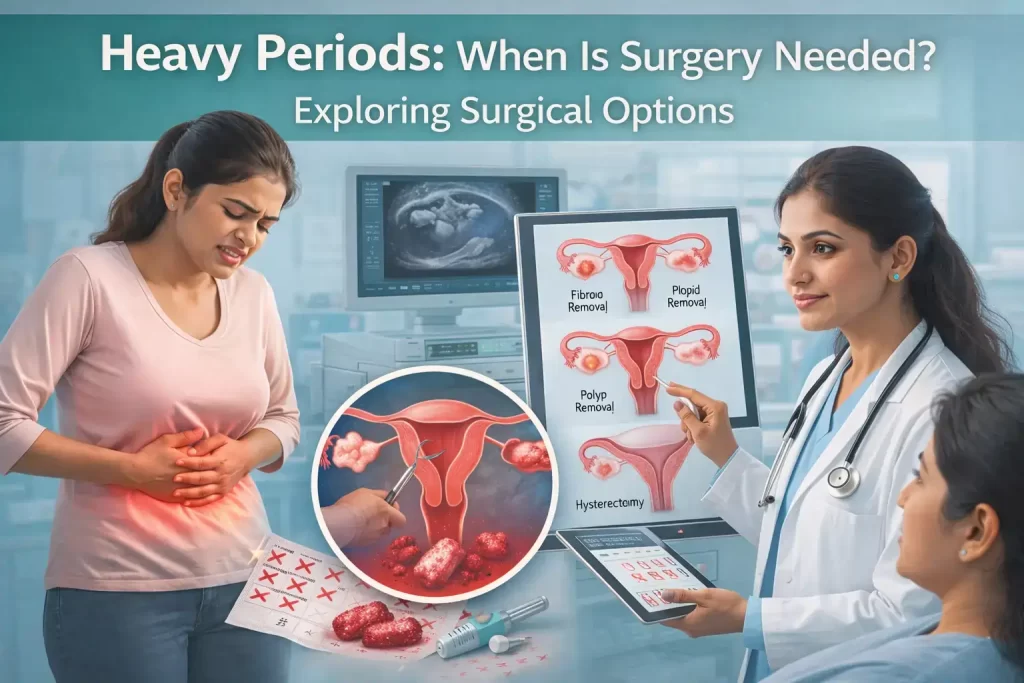
Heavy periods are defined as menstrual bleeding that is:
- Excessively heavy
- Prolonged (lasting more than 7 days)
- Interferes with daily activities
Clinically, heavy periods may be suspected if a woman needs to change pads or tampons every 1–2 hours, passes large blood clots, or experiences fatigue due to blood loss.
Common Symptoms of Heavy Menstrual Bleeding
Women with heavy periods may experience:
- Soaking pads or tampons frequently
- Bleeding for more than a week
- Passing large clots
- Severe lower abdominal pain
- Weakness or dizziness
- Breathlessness due to anemia
Ignoring these symptoms can lead to iron-deficiency anemia and long-term health issues.
Causes of Heavy Periods
Heavy periods are not a disease but a symptom of an underlying condition.
Common causes include:
- Uterine fibroids
- Adenomyosis
- Endometrial polyps
- Hormonal imbalance
- Endometriosis
- Polycystic ovary syndrome (PCOS)
- Infections or inflammation
- Bleeding disorders
- Side effects of certain medications
Identifying the exact cause is crucial before deciding treatment.
When Are Heavy Periods Considered Serious?
Heavy periods become medically concerning when they:
- Cause anemia
- Affect work, sleep, or daily activities
- Do not improve with medications
- Occur after menopause
- Are associated with severe pain or rapid worsening
In such cases, further evaluation is required to rule out serious conditions.
Do Heavy Periods Always Need Surgery?
No. Most women with heavy periods do not need surgery.
Doctors usually begin with medical treatment, such as:
- Hormonal medications
- Iron supplements
- Pain management
- Lifestyle modifications
Surgery is considered only when conservative treatments fail or when a structural problem is present.
When Is Surgery Needed for Heavy Periods?
Surgery may be recommended in the following situations:
1. Failure of Medical Treatment
If heavy bleeding does not improve after adequate medical therapy, surgical options are evaluated.
2. Presence of Uterine Fibroids or Polyps
Large fibroids or polyps that cause excessive bleeding often require surgical removal.
3. Adenomyosis or Endometriosis
When symptoms are severe and unresponsive to medication, surgery may provide relief.
4. Severe Anemia
Repeated heavy bleeding leading to dangerously low hemoglobin levels may necessitate definitive treatment.
5. Suspicion of Cancer
Abnormal bleeding, especially after menopause, requires prompt investigation and sometimes surgical management.
6. Completed Family
Women who have completed childbearing may opt for definitive surgical treatment if symptoms are severe.
Types of Surgery for Heavy Periods
The type of surgery depends on the cause, age, fertility goals, and severity of symptoms.
Hysteroscopy
Used to diagnose and treat polyps, small fibroids, or abnormal uterine lining. It is minimally invasive and often done as a day-care procedure.
Myomectomy
Surgical removal of fibroids while preserving the uterus. Preferred for women who wish to conceive.
Endometrial Ablation
Destroys the uterine lining to reduce bleeding. Suitable for selected women who do not wish to have future pregnancies.
Laparoscopic Surgery
Used for fibroids, endometriosis, or adenomyosis with faster recovery and less pain.
Hysterectomy
Removal of the uterus. Considered a last resort for severe, persistent bleeding when all other treatments fail.
How Do Doctors Decide Whether Surgery Is Needed?
Doctors evaluate:
- Severity and duration of bleeding
- Age and hormonal status
- Cause of heavy periods
- Desire for future pregnancy
- Response to medications
- Ultrasound and test results
A personalised treatment plan is always preferred over a one-size-fits-all approach.
Is Surgery Safe for Heavy Periods?
With modern techniques such as laparoscopic, hysteroscopic, and robotic surgery, procedures for heavy periods are generally safe and effective.
Risks depend on:
- Type of surgery
- Patient’s overall health
- Experience of the surgeon
Most minimally invasive procedures allow quick recovery and short hospital stays.
Can Heavy Periods Come Back After Surgery?
Recurrence depends on the type of surgery and underlying cause.
While procedures like hysteroscopy or myomectomy may require long-term follow-up, hysterectomy provides permanent relief.
Regular check-ups help monitor recovery and prevent complications.
When Should You Consult a Gynaecologist?
You should seek medical advice if you experience:
- Heavy bleeding every cycle
- Periods lasting more than 7 days
- Severe pain with periods
- Symptoms of anemia
- Bleeding after menopause
Early consultation helps avoid unnecessary suffering and complex treatments.
Final Thoughts
Heavy periods should never be ignored or normalised. While many cases can be managed with medications, surgery becomes necessary when symptoms are severe, persistent, or caused by structural uterine problems.
The key is early diagnosis, correct evaluation, and personalised treatment planning. With modern minimally invasive surgical options, women can achieve symptom relief with faster recovery and improved quality of life.
If you are experiencing heavy or prolonged periods that are affecting your daily life, consult an experienced gynaecologist to identify the cause and discuss the most suitable treatment options for your condition.
Frequently Asked Questions (FAQs)
Are heavy periods normal?
No. While slight variation in menstrual flow is common, consistently heavy periods are not normal and may indicate an underlying medical condition such as fibroids, hormonal imbalance, or endometrial problems.
How heavy is too heavy for periods?
Periods are considered heavy if you soak through a pad or tampon every 1–2 hours, pass large blood clots, bleed for more than 7 days, or feel weak due to blood loss.
Can heavy periods stop on their own?
In some cases, especially in teenagers or during perimenopause, heavy periods may settle with time. However, persistent heavy bleeding should always be evaluated by a Gynaecologist.
Do heavy periods always need surgery?
No. Most women with heavy periods can be treated with medications or hormonal therapy. Surgery is recommended only when medical treatment fails or a structural cause is identified.
What is the first treatment for heavy periods?
The first line of treatment usually includes medications, hormonal therapy, or iron supplements, depending on the cause and severity of bleeding.
Which surgery is best for heavy periods?
There is no single “best” surgery. The choice depends on the cause of heavy bleeding, age, fertility plans, and overall health. Options include hysteroscopy, myomectomy, endometrial ablation, or hysterectomy.
Is hysteroscopy enough to treat heavy periods?
Hysteroscopy is effective when heavy bleeding is caused by uterine polyps, small fibroids, or abnormal endometrial growth. It may not be sufficient for all conditions.
Is hysterectomy the only permanent solution for heavy periods?
Yes, hysterectomy provides permanent relief from heavy periods. However, it is considered only when all other treatments fail or are unsuitable.
Can heavy periods cause anemia?
Yes. Chronic heavy bleeding is a common cause of iron-deficiency anemia, which can lead to fatigue, dizziness, breathlessness, and weakness.
Can heavy periods affect fertility?
Heavy periods themselves may not cause infertility, but underlying conditions such as fibroids, endometriosis, or hormonal imbalance can impact fertility if left untreated.
Are heavy periods common after the age of 40?
Yes. Hormonal changes during perimenopause can cause heavy or irregular bleeding, but medical evaluation is essential to rule out serious conditions.
Is surgery for heavy periods safe?
Modern surgical techniques such as laparoscopic and hysteroscopic surgery are generally safe when performed by experienced specialists. Risks depend on the type of procedure and patient health.
How long is recovery after surgery for heavy periods?
Recovery varies by procedure. Minimally invasive surgeries usually allow return to normal activities within a few days to weeks, while hysterectomy may require a longer recovery period.
When should I see a doctor for heavy periods?
You should consult a gynaecologist if heavy bleeding affects your daily life, lasts more than 7 days, causes anemia, or occurs after menopause.
Can lifestyle changes reduce heavy periods?
Healthy diet, weight management, and stress reduction may help in some cases, but lifestyle changes alone may not be sufficient if an underlying medical condition is present.
