Heavy periods after the age of 40 are a common concern for many women, yet they are often misunderstood or ignored. While menstrual changes are expected as women approach menopause, Heavy or Prolonged bleeding is not something that should be considered normal.
At this stage of life, heavy periods can significantly affect daily activities, energy levels, and overall health. In some cases, they may signal an underlying gynaecological condition that requires medical attention.
This article explains why heavy periods occur after age 40, the most common causes, available treatment options, and when women should consult a gynaecologist.
Are Heavy Periods Normal After Age 40?
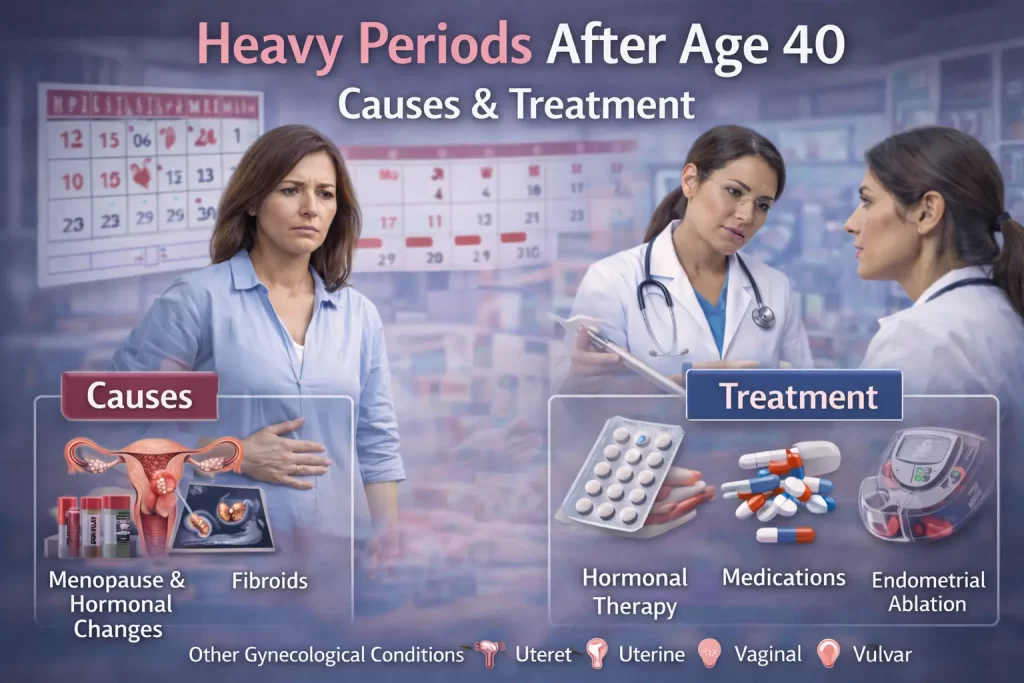
As women enter their 40s, the Body Gradually transitions into Perimenopause, the phase before Menopause. Hormonal fluctuations during this time can cause changes in menstrual cycles, including irregular or heavy bleeding.
However, persistently Heavy Periods after age 40 are not Considered Normal and should always be evaluated. While hormonal imbalance is common, structural and medical causes become more frequent with age.
What Are Heavy Periods?
Heavy periods, also known as Menorrhagia, refer to menstrual bleeding that is excessive in amount or duration.
Signs of heavy periods include:
- Bleeding lasting more than 7 days
- Soaking pads or tampons every 1–2 hours
- Passing large blood clots
- Severe fatigue or weakness during periods
- Disruption of daily activities
If these symptoms occur repeatedly, medical evaluation is essential.
Why Do Heavy Periods Occur After Age 40?
After 40, Menstrual bleeding is influenced by Hormonal changes, uterine conditions, and overall health. The balance between Estrogen and Progesterone becomes irregular, which can directly affect the thickness of the uterine lining.
In addition, the risk of certain gynaecological conditions increases with age.
Common Causes of Heavy Periods After Age 40
1. Hormonal Imbalance (Perimenopause)
During perimenopause, ovulation becomes irregular. When ovulation does not occur, progesterone levels remain low while estrogen continues to stimulate the uterine lining. This leads to excessive buildup of the endometrium, resulting in heavy or prolonged bleeding.
Hormonal imbalance is the most common cause of heavy periods after 40.
2. Uterine Fibroids
Uterine fibroids are non-cancerous growths of the uterus and are a leading cause of heavy periods in women over 40.
Fibroids may cause:
- Very heavy menstrual bleeding
- Prolonged periods
- Pelvic pressure or pain
- Frequent urination
Fibroids tend to grow under the influence of Estrogen, which can remain high during perimenopause.
3. Adenomyosis
Adenomyosis occurs when the inner lining of the uterus grows into the muscular wall of the uterus. This condition is more common in women aged 40- 50.
It often causes:
- Heavy and painful periods
- Prolonged bleeding
- Enlarged and tender uterus
Adenomyosis is frequently underdiagnosed and may coexist with fibroids.
4. Endometrial Polyps
Endometrial Polyps are small growths arising from the uterine lining. Even small polyps can cause abnormal and heavy bleeding, especially in women after 40.
Symptoms may include:
- Heavy periods
- Bleeding between periods
- Bleeding after intercourse
Polyps require evaluation to rule out precancerous changes.
5. Endometrial Hyperplasia
Endometrial Hyperplasia is a condition where the uterine lining becomes excessively thick due to prolonged estrogen exposure without progesterone.
This condition is important to identify because it can increase the risk of endometrial cancer if left untreated.
6. Thyroid Disorders
Thyroid imbalance, particularly hypothyroidism, is common in women over 40 and can contribute to heavy periods.
Symptoms may include fatigue, weight gain, hair loss, and menstrual irregularities.
7. Medical Conditions and Medications
Certain medical conditions and medications can also cause heavy bleeding, including:
- Blood clotting disorders
- Diabetes
- Hypertension
- Blood-thinning medications
A detailed medical history helps identify these causes.
8. Cancerous and Pre-Cancerous Conditions
Although less common, heavy or irregular bleeding after 40 can sometimes be an early sign of:
- Endometrial cancer
- Cervical cancer
Bleeding after menopause or sudden worsening of bleeding should never be ignored.
How Are Heavy Periods After 40 Diagnosed?
Evaluation usually includes:
- Detailed menstrual and medical history
- Pelvic examination
- Blood tests (hemoglobin, hormones, thyroid)
- Pelvic ultrasound
- Hysteroscopy for direct uterine evaluation
- Endometrial biopsy when indicated
Early diagnosis helps prevent complications and guides appropriate treatment.
Treatment Options for Heavy Periods After Age 40
Treatment depends on the cause, severity of symptoms, and whether the woman wishes to preserve fertility.
Medical Treatment
Medical options may include:
- Hormonal therapy
- Progesterone-based medications
- Treatment of thyroid or medical conditions
- Iron supplements for anemia
These are often the first line of treatment.
Minimally Invasive Procedures
When medications are ineffective or a structural cause is present, procedures may be recommended:
- Hysteroscopy for polyps or small fibroids
- Endometrial ablation in selected cases
- Laparoscopic surgery for fibroids or adenomyosis
These procedures offer faster recovery and symptom relief.
Surgical Treatment
Surgery may be considered when symptoms are severe or persistent:
- Myomectomy for fibroids
- Hysterectomy for definitive treatment when childbearing is complete
The decision is always individualised.
When Should Women After 40 See a Doctor?
You should consult a gynaecologist if:
- Periods become suddenly heavier
- Bleeding lasts more than 7 days
- You develop anemia or fatigue
- Bleeding occurs between periods
- There is bleeding after menopause
Early consultation ensures timely diagnosis and safer treatment options.
Can Heavy Periods After 40 Be Prevented?
While hormonal changes cannot be prevented, early evaluation, regular check-ups, and timely treatment of underlying conditions can significantly reduce complications.
Maintaining a healthy weight, managing stress, and following medical advice also help regulate cycles.
Final Thoughts
Heavy periods after age 40 should never be ignored or accepted as a normal part of ageing. While hormonal changes play a role, many women have treatable conditions such as fibroids, adenomyosis, or endometrial abnormalities.
With accurate diagnosis and personalised treatment, most women can achieve relief, prevent anemia, and maintain a good quality of life during the perimenopausal years.
If you are experiencing heavy periods after the age of 40, consult a Gynaecologist for proper evaluation and personalised treatment before complications develop.
Frequently Asked Questions (FAQs)
Are heavy periods common after age 40?
Heavy periods can occur after age 40 due to hormonal changes during perimenopause, but persistently heavy or prolonged bleeding is not considered normal and should be evaluated.
Why do periods become heavier after 40?
As ovulation becomes irregular, progesterone levels drop while estrogen continues to build the uterine lining, leading to heavier bleeding. Conditions like fibroids and adenomyosis are also more common at this age.
Can heavy periods after 40 be a sign of menopause?
Heavy periods are more related to perimenopause rather than menopause. Once menopause occurs, periods stop completely. Any bleeding after menopause requires immediate medical attention.
When should I worry about heavy periods after 40?
You should be concerned if bleeding lasts more than 7 days, requires frequent pad changes, causes anemia, or occurs between periods or after menopause.
Can fibroids cause heavy periods after age 40?
Yes. Fibroids are a very common cause of heavy and prolonged bleeding in women over 40 and may worsen during perimenopause.
Is heavy bleeding after 40 always due to hormonal imbalance?
No. While hormonal imbalance is common, structural problems like fibroids, polyps, adenomyosis, or even pre-cancerous conditions must be ruled out.
How are heavy periods after 40 diagnosed?
Diagnosis usually includes pelvic examination, blood tests, ultrasound, hysteroscopy, and sometimes endometrial biopsy to rule out serious causes.
Can heavy periods after 40 cause anemia?
Yes. Chronic heavy bleeding can lead to iron-deficiency anemia, causing fatigue, dizziness, and breathlessness.
What treatments are available for heavy periods after age 40?
Treatment depends on the cause and may include hormonal therapy, hysteroscopy, minimally invasive surgery, or hysterectomy in severe cases.
Is hysterectomy the only solution for heavy periods after 40?
No. Many women respond well to medical treatment or minimally invasive procedures. Hysterectomy is considered only when other treatments fail or are unsuitable.
Should heavy periods after 40 be treated even if menopause is near?
Yes. Heavy bleeding should not be ignored, even if menopause is approaching, as it can cause anemia and may indicate serious conditions.
Can lifestyle changes help reduce heavy periods after 40?
Healthy weight management, stress control, and treatment of medical conditions can help, but lifestyle changes alone may not be sufficient in all cases.
