Heavy periods are one of the most common gynaecological complaints among women, yet they are often ignored or normalised for years. Many women believe that heavy bleeding during periods is just “how their body works,” but medically, Persistently Heavy periods are not normal and usually indicate an underlying cause.
Heavy periods can affect physical health, emotional well-being, work productivity, and overall quality of life. In severe cases, they may lead to anemia and long-term health complications.
This article explains all major causes of heavy periods in women, how they affect the body, when to worry, and why timely diagnosis is essential.
What Are Heavy Periods?
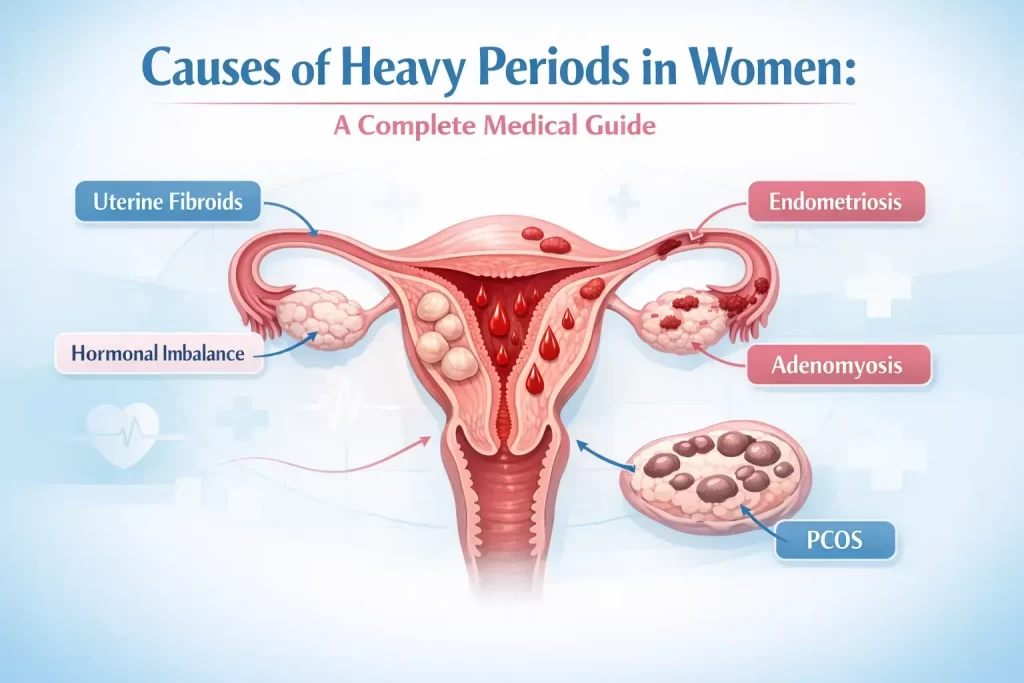
Heavy periods, also known as Menorrhagia, refer to Menstrual bleeding that is excessive in amount, duration, or both.
A woman may be experiencing heavy periods if:
- Bleeding lasts more than 7 days
- Pads or tampons need to be changed every 1–2 hours
- Large blood clots are passed frequently
- Periods interfere with daily activities
- Fatigue or breathlessness occurs due to blood loss
Heavy bleeding is a symptom, not a disease. Understanding the cause is the key to effective treatment.
Why Do Heavy Periods Occur?
Menstrual bleeding is controlled by a delicate balance between hormones, uterine lining growth, blood clotting mechanisms, and uterine muscle contractions. When this balance is disturbed, menstrual bleeding may become excessive.
The causes of heavy periods can be broadly classified into:
- Hormonal causes
- Structural uterine problems
- Medical and systemic conditions
- Age-related changes
- Medication-related causes
1. Hormonal Imbalance
Hormonal imbalance is one of the most common causes of heavy periods, especially in younger women and women approaching menopause.
Estrogen helps build the uterine lining, while progesterone stabilises and sheds it. When progesterone levels are insufficient, the uterine lining becomes excessively thick and sheds heavily.
Hormonal imbalance may be seen in:
- Adolescence (early years after menarche)
- Perimenopause
- Polycystic ovary syndrome (PCOS)
- Thyroid disorders
- Stress and sudden weight changes
Hormonal causes often result in irregular, prolonged, or unpredictable bleeding.
2. Uterine Fibroids
Uterine fibroids are non-cancerous growths that develop in or on the uterus. They are extremely common and a leading cause of heavy periods in women aged 30–50.
Fibroids can cause heavy bleeding by:
- Increasing the surface area of the uterine lining
- Distorting the uterine cavity
- Preventing proper uterine contractions during periods
Women with fibroids may also experience pelvic pressure, bloating, pain, or frequent urination along with heavy bleeding.
3. Adenomyosis
Adenomyosis occurs when the inner lining of the uterus grows into the muscular wall of the uterus. This condition causes the uterus to become enlarged and tender.
Adenomyosis often leads to:
- Very heavy and painful periods
- Prolonged bleeding
- Pelvic pain throughout the cycle
It is more common in women in their late 30s and 40s and in women who have had previous childbirth.
4. Endometrial Polyps
Endometrial polyps are small growths that develop from the lining of the uterus. Even small polyps can cause disproportionately heavy or irregular bleeding.
Polyps may lead to:
- Heavy menstrual bleeding
- Bleeding between periods
- Bleeding after intercourse
- Bleeding after menopause
Polyps are usually benign but should always be evaluated, especially in women over 40.
5. Endometriosis
Endometriosis is a condition in which tissue similar to the uterine lining grows outside the uterus. While it is more commonly associated with pain, it can also contribute to heavy periods.
Endometriosis may cause:
- Heavy and painful periods
- Chronic pelvic pain
- Pain during intercourse
- Fertility problems
Because symptoms vary, endometriosis is often underdiagnosed.
6. Polycystic Ovary Syndrome (PCOS)
PCOS is a hormonal disorder that affects ovulation. Women with PCOS may experience infrequent periods followed by very heavy bleeding when periods do occur.
The absence of regular ovulation leads to:
- Prolonged estrogen exposure
- Thickened uterine lining
- Heavy and irregular periods
PCOS is often associated with weight gain, acne, excess facial hair, and difficulty conceiving.
7. Thyroid Disorders
Both hypothyroidism and hyperthyroidism can disrupt menstrual cycles.
Hypothyroidism, in particular, is associated with:
- Heavy menstrual bleeding
- Fatigue
- Weight gain
- Hair loss
Thyroid imbalance affects hormone regulation and blood clotting mechanisms, contributing to excessive bleeding.
8. Bleeding Disorders
Certain blood clotting disorders can cause heavy periods, especially from a young age.
Women with bleeding disorders may notice:
- Heavy periods since adolescence
- Easy bruising
- Prolonged bleeding after injuries or surgery
These conditions are often overlooked and require specialised evaluation.
9. Intrauterine Devices (IUDs)
Copper intrauterine devices may increase menstrual bleeding and cramping, particularly during the first few months after insertion.
Hormonal IUDs, on the other hand, usually reduce menstrual bleeding over time.
10. Medications
Some medications can contribute to heavy periods, including:
- Blood thinners
- Certain hormonal treatments
- Chemotherapy drugs
Any change in menstrual pattern after starting a new medication should be discussed with a doctor.
11. Infections and Inflammation
Pelvic infections or chronic inflammation of the uterus can cause abnormal and heavy bleeding. These conditions are often accompanied by pelvic pain, fever, or abnormal vaginal discharge.
12. Cancerous and Pre-Cancerous Conditions
Although less common, cancers of the uterus or cervix can cause heavy or abnormal bleeding.
Warning signs include:
- Heavy bleeding after menopause
- Bleeding between periods
- Bleeding after intercourse
Such symptoms require urgent medical evaluation.
Heavy Periods at Different Life Stages
Adolescence
Heavy periods are common in the first few years due to immature hormonal regulation, but persistent bleeding should not be ignored.
Reproductive Age
Structural causes like fibroids, polyps, and hormonal disorders are common.
After Age 40
Hormonal changes, adenomyosis, fibroids, and cancer risk increase, making evaluation essential.
How Are the Causes of Heavy Periods Diagnosed?
Diagnosis usually involves:
- Detailed medical history
- Physical and pelvic examination
- Blood tests (hemoglobin, hormones, thyroid)
- Pelvic ultrasound
- Hysteroscopy in selected cases
- Endometrial biopsy when indicated
Identifying the cause helps determine the most effective treatment.
Why You Should Not Ignore Heavy Periods
Untreated heavy periods can lead to:
- Iron-deficiency anemia
- Chronic fatigue
- Reduced work productivity
- Emotional distress
- Fertility complications
Early diagnosis can often prevent the need for major surgery.
When Should You See a Doctor?
You should consult a gynaecologist if:
- Heavy bleeding persists for several cycles
- Periods last longer than 7 days
- You feel weak or breathless during periods
- Bleeding occurs after menopause
- Pain is severe or worsening
Final Thoughts
Heavy periods are not something women should learn to live with. They are a signal that something in the body needs attention. From hormonal imbalance to fibroids and other uterine conditions, the causes of heavy periods are varied but treatable.
With proper diagnosis and personalised treatment, most women can achieve significant relief and improved quality of life. Early consultation with a gynaecologist is the most important step toward effective management.
If you are experiencing heavy or prolonged periods, consult a gynaecologist for an accurate diagnosis and personalised treatment before complications develop.
Frequently Asked Questions (FAQs)
What are heavy periods medically called?
Heavy periods are medically known as menorrhagia, which refers to menstrual bleeding that is excessive in amount, duration, or both.
What is the most common cause of heavy periods in women?
Hormonal imbalance is the most common cause, especially during adolescence, after childbirth, and during perimenopause.
Can fibroids cause heavy periods?
Yes. Uterine fibroids are one of the leading structural causes of heavy and prolonged menstrual bleeding in women.
Can heavy periods be caused by hormonal imbalance?
Yes. When estrogen and progesterone are not balanced, the uterine lining can become too thick and shed heavily during periods.
Are heavy periods normal after age 40?
No. While menstrual changes are common after 40, persistently heavy periods should always be evaluated to rule out fibroids, adenomyosis, or endometrial problems.
Can stress cause heavy periods?
Chronic stress can affect hormonal balance and ovulation, which may lead to irregular or heavy menstrual bleeding in some women.
Can heavy periods lead to anemia?
Yes. Repeated heavy menstrual bleeding is one of the most common causes of iron-deficiency anemia in women.
How do doctors diagnose the cause of heavy periods?
Doctors use medical history, pelvic examination, blood tests, ultrasound, and procedures like hysteroscopy or biopsy when required.
Do heavy periods always require surgery?
No. Many women respond well to medical or hormonal treatment. Surgery is recommended only when medical treatment fails or a structural cause is present.
Can PCOS cause heavy periods?
Yes. Women with PCOS may have infrequent periods followed by heavy bleeding due to hormonal imbalance.
When should I see a doctor for heavy periods?
You should consult a gynaecologist if bleeding lasts more than 7 days, requires frequent pad changes, causes fatigue, or disrupts daily life.
Can heavy periods go away on their own?
In some cases, especially in adolescents, heavy periods may improve with time. Persistent heavy bleeding should not be ignored.
