Women’s gynaecological health conditions often require surgical treatment, but the fear of large cuts, pain, and long recovery keeps many patients from seeking timely care. Fortunately, medical science has evolved significantly with the introduction of Minimally Invasive Gynaecological Surgery, a modern approach that treats complex gynaecological problems with far less physical trauma than traditional open procedures.
What Is Minimally Invasive Gynaecological Surgery?
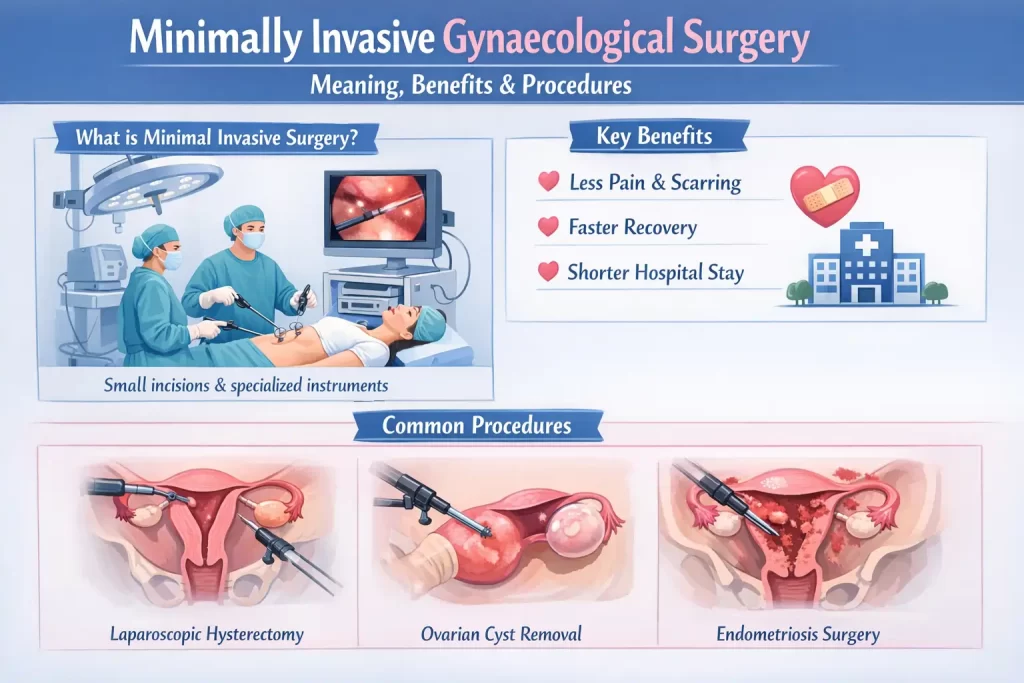
Minimally Invasive Gynaecological Surgery (MIGS) refers to modern surgical techniques used to diagnose and treat gynaecological conditions with minimal damage to the body. Unlike traditional open surgery, which requires large abdominal cuts, minimally invasive surgery uses small incisions or natural body openings to perform procedures.
These surgeries are performed using specialised instruments and cameras that provide a magnified view of internal organs, allowing surgeons to operate with high precision.
Minimally invasive surgery is now widely used to manage conditions such as heavy menstrual bleeding, fibroids, ovarian cysts, endometriosis, infertility-related problems, and selected gynaecological cancers.
Why Was Minimally Invasive Surgery Needed?
Traditional open gynaecological surgery often involved:
- Large abdominal incisions
- Significant blood loss
- Intense post-operative pain
- Long hospital stays
- Delayed return to normal activities
For women managing family, work, and personal responsibilities, long recovery times were physically and emotionally challenging.
Minimally invasive surgery was developed to:
- Reduce surgical trauma
- Improve patient comfort
- Shorten recovery time
- Maintain surgical effectiveness
Today, it is considered the preferred approach for many gynaecological conditions.
How Minimally Invasive Surgery Works
Instead of one large cut, surgeons make small keyhole-sized incisions or use natural openings such as the vagina.
A camera transmits real-time images to a screen, giving surgeons a detailed view of internal organs. Specialised instruments are then used to perform precise surgical steps.
This approach allows accurate treatment while preserving surrounding healthy tissues.
Types of Minimally Invasive Gynaecological Surgery
Minimally invasive gynaecology includes three main techniques:
Laparoscopic Surgery
Performed through small abdominal incisions using a laparoscope and fine instruments.
Hysteroscopic Surgery
Performed through the vagina and cervix to treat conditions inside the uterus without external cuts.
Robotic-Assisted Surgery
Uses robotic arms controlled by the surgeon for enhanced precision, especially useful in complex and cancer-related procedures.
Benefits of Minimally Invasive Gynaecological Surgery
Compared to open surgery, Minimally Invasive Surgery offers multiple advantages:
- Smaller incisions and minimal scarring
- Reduced post-operative pain
- Lower blood loss
- Decreased risk of infection
- Shorter hospital stay
- Faster recovery and return to daily activities
- Better cosmetic outcomes
- Preservation of reproductive organs in many cases
These benefits make minimally invasive surgery especially suitable for women of reproductive age.
Gynaecological Conditions Treated Using Minimally Invasive Surgery
Minimally invasive techniques are used to treat a wide range of gynaecological problems.
Heavy Menstrual Bleeding
Procedures such as hysteroscopy help diagnose and treat causes like polyps or small fibroids.
Uterine Fibroids
Fibroids can be removed laparoscopically while preserving the uterus.
Ovarian Cysts
Cyst removal is done with minimal damage to ovarian tissue, helping preserve fertility.
Endometriosis
Minimally invasive surgery allows precise removal of endometriosis tissue, reducing pain and improving quality of life.
Adenomyosis
Selected cases can be managed surgically with minimally invasive approaches.
Infertility-Related Conditions
Structural abnormalities affecting fertility can be corrected without major surgery.
Gynaecological Cancers
Early-stage cancers may be treated using laparoscopic or robotic surgery for accurate staging and treatment.
Safety of Minimally Invasive Surgery
Minimally invasive gynaecological surgery is considered safe and effective when performed by experienced surgeons.
Advances in imaging, surgical instruments, and training have significantly reduced complication rates. Careful patient selection and pre-operative evaluation further enhance safety.
Minimally Invasive Surgery vs Open Surgery
Open surgery involves a large incision, longer recovery, and higher post-operative discomfort.
Minimally invasive surgery achieves the same treatment goals with:
- Less physical trauma
- Faster healing
- Lower complication rates
For many women, this translates into better overall surgical experience.
Common Minimally Invasive Gynaecological Procedures
Hysteroscopy
Used to diagnose and treat uterine polyps, fibroids, abnormal bleeding, and retained tissue. Often performed as a day-care procedure.
Laparoscopic Ovarian Cyst Surgery
Removes ovarian cysts while preserving ovarian function and fertility.
Laparoscopic Myomectomy
Removes fibroids without removing the uterus, ideal for women planning pregnancy.
Laparoscopic or Robotic Hysterectomy
Removes the uterus with minimal pain and faster recovery compared to open surgery.
Endometriosis Surgery
Precisely removes endometriosis tissue to relieve pain and improve fertility outcomes.
Pelvic & Para-Aortic Lymph Node Dissection
Performed using minimally invasive or robotic techniques for accurate cancer staging.
Recovery After Minimally Invasive Gynaecological Surgery
Recovery is usually quick and comfortable.
Most women:
- Resume light activities within a few days
- Return to work within 1-2 weeks
- Experience minimal scarring and pain
Recovery time depends on the type of procedure and individual health.
Impact on Fertility
In many cases, minimally invasive surgery helps preserve or improve fertility. Procedures are carefully planned to protect reproductive organs, especially in women wishing to conceive.
When Open Surgery May Still Be Required
Open surgery may be necessary in cases involving:
- Very large growths
- Extensive disease spread
- Certain advanced cancers
However, advancements continue to reduce the need for open procedures.
Choosing the Right Surgeon
The success of minimally invasive surgery depends heavily on the surgeon’s experience and expertise.
An experienced specialist ensures:
- Accurate diagnosis
- Safe surgery
- Lower complication risk
- Better long-term outcomes
Final Thoughts
Minimally invasive gynaecological surgery has revolutionised women’s healthcare by offering effective treatment with minimal disruption to daily life. From common menstrual problems to complex surgical conditions, this approach allows women to heal faster, feel better, and return to normal activities with confidence.
Early consultation and expert evaluation help determine whether minimally invasive surgery is the most suitable option for each condition.
If you are facing gynaecological health issues and want to explore minimally invasive treatment options, consult an experienced gynaecologist for personalised advice and care.
Frequently Asked Questions (FAQs)
What is minimally invasive gynaecological surgery?
Minimally invasive gynaecological surgery is a modern surgical approach that treats women’s health conditions using small incisions or natural openings, resulting in less pain, minimal scarring, and faster recovery compared to open surgery.
Which gynaecological conditions can be treated with minimally invasive surgery?
Conditions such as heavy menstrual bleeding, fibroids, ovarian cysts, endometriosis, adenomyosis, infertility-related problems, and selected gynaecological cancers can be treated using minimally invasive techniques.
What are the types of minimally invasive gynaecological surgery?
The main types include laparoscopic surgery, hysteroscopic surgery, and robotic-assisted gynaecological surgery.
Is minimally invasive surgery safer than open surgery?
Yes. When performed by an experienced surgeon, minimally invasive surgery is generally safer, with lower risk of infection, less blood loss, and quicker recovery than open surgery.
Is minimally invasive gynaecological surgery painful?
Most women experience significantly less pain compared to open surgery. Any discomfort after surgery is usually mild and manageable with basic pain medication.
How long is hospital stay after minimally invasive surgery?
Many procedures are day-care or require only 1-2 days of hospital stay, depending on the type of surgery and individual recovery.
How long does recovery take after minimally invasive gynaecological surgery?
Most women return to normal daily activities within a few days to two weeks, which is much faster than recovery after open surgery.
