Endometriosis is a common yet often misunderstood gynaecological condition that affects women during their reproductive years. Many women live with severe period pain, heavy bleeding, or fertility problems for years without knowing that endometriosis may be the underlying cause.
Because its symptoms are frequently normalised or mistaken for routine menstrual pain, endometriosis is often diagnosed late. Early awareness, however, can help prevent long-term pain, fertility issues, and reduced quality of life.
This article explains what endometriosis is, why it happens, how it affects the body, and what treatment options are available.
What Is Endometriosis?
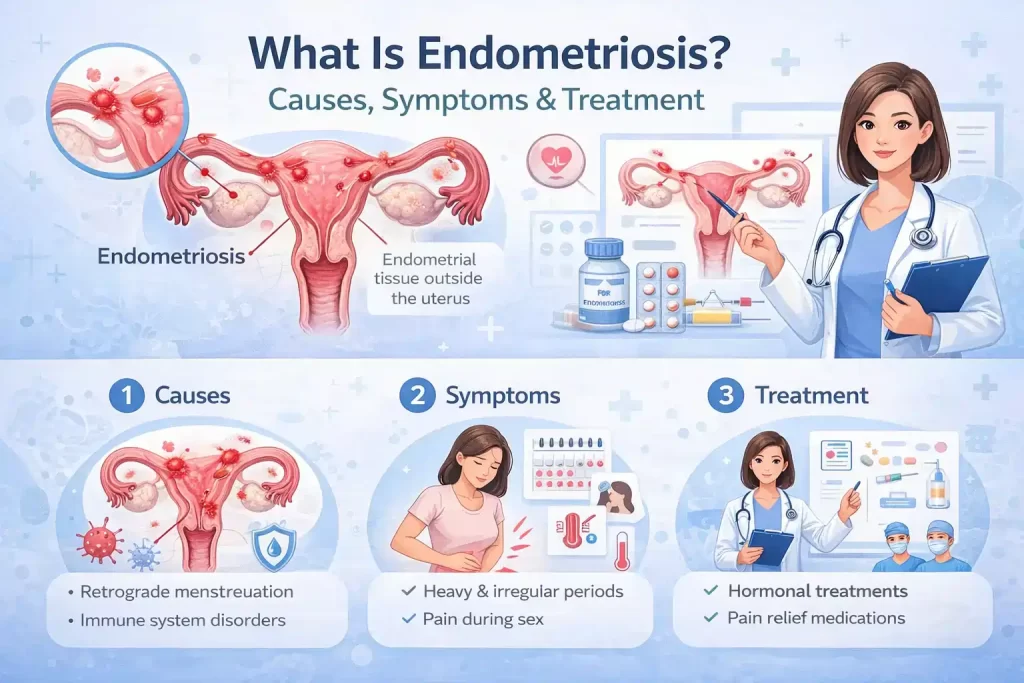
Endometriosis is a condition in which tissue similar to the inner lining of the uterus (endometrium) grows outside the uterus.
These abnormal tissue growths are most commonly found on:
- Ovaries
- Fallopian tubes
- Pelvic lining
- Uterine ligaments
- Bladder or bowel (in advanced cases)
Just like normal uterine lining, this tissue responds to hormonal changes during the menstrual cycle. However, because it is located outside the uterus, it has no natural way to leave the body, leading to inflammation, swelling, pain, and scar formation.
How Endometriosis Affects the Body
During each menstrual cycle:
- The abnormal tissue thickens and may bleed
- Blood and tissue get trapped inside the pelvis
- Inflammation and irritation occur
- Scar tissue (adhesions) may form, causing organs to stick together
Over time, this process can result in chronic pain, heavy periods, and fertility problems.
Common Symptoms of Endometriosis
Symptoms of endometriosis vary from woman to woman. Some experience severe pain, while others may have mild or no symptoms.
Common symptoms include:
- Severe or worsening menstrual cramps
- Heavy or prolonged periods
- Pain before, during, or after periods
- Chronic pelvic or lower back pain
- Pain during or after intercourse
- Pain during bowel movements or urination (especially during periods)
- Bloating and digestive discomfort
- Fatigue and low energy
- Difficulty conceiving
Pain that disrupts daily life or does not improve with painkillers should never be ignored.
Endometriosis and Heavy Periods
Endometriosis is a common cause of heavy menstrual bleeding, especially when it affects the ovaries or pelvic lining.
Women with endometriosis may experience:
- Excessive bleeding
- Periods lasting longer than 7 days
- Bleeding between cycles
When heavy periods are combined with severe pain, endometriosis should be considered.
Causes of Endometriosis
The exact cause of endometriosis is not fully understood, but several theories exist.
Possible contributing factors include:
- Retrograde menstruation (menstrual blood flowing backward into the pelvis)
- Hormonal imbalance, particularly estrogen dominance
- Genetic predisposition (family history)
- Immune system dysfunction
- Previous pelvic surgeries such as C-section
Most likely, endometriosis develops due to a combination of these factors rather than a single cause.
Who Is at Higher Risk of Endometriosis?
Women may have a higher risk if they:
- Have a family history of endometriosis
- Started menstruating at an early age
- Have short menstrual cycles
- Experience heavy or painful periods
- Have never been pregnant
Endometriosis and Fertility
Endometriosis is one of the leading causes of infertility. It may affect fertility by:
- Causing inflammation around reproductive organs
- Distorting pelvic anatomy due to adhesions
- Affecting egg quality or ovulation
- Interfering with implantation
However, many women with endometriosis can conceive, especially with early diagnosis and proper treatment.
How Is Endometriosis Diagnosed?
Diagnosing endometriosis can be challenging because symptoms overlap with other conditions.
Diagnosis usually involves:
- Detailed menstrual and pain history
- Pelvic examination
- Ultrasound imaging
- MRI in selected cases
- Diagnostic laparoscopy (gold standard for confirmation)
Laparoscopy allows direct visualisation and, in many cases, treatment during the same procedure.
Treatment Options for Endometriosis
There is no permanent cure for endometriosis, but symptoms can be effectively managed with the right treatment plan.
Treatment depends on:
- Severity of symptoms
- Age
- Fertility goals
- Extent of disease
Medical Treatment
Medical management focuses on controlling pain and slowing disease progression.
Options may include:
- Hormonal therapy
- Pain-relieving medications
- Menstrual suppression
Medical treatment does not remove existing endometriosis tissue but helps manage symptoms.
Minimally Invasive Surgery
Surgery may be recommended when:
- Pain is severe or persistent
- Fertility is affected
- Medical treatment fails
Laparoscopic or robotic surgery allows precise removal of endometriosis tissue while preserving healthy organs. Minimally invasive techniques offer faster recovery and less post-operative pain.
Fertility-Focused Treatment
For women trying to conceive, treatment is carefully planned to protect ovarian reserve and improve pregnancy chances. Assisted reproductive techniques may be considered when needed.
Can Endometriosis Come Back After Treatment?
Yes, endometriosis can recur, especially if hormonal suppression is not continued after surgery. Regular follow-up and long-term management help reduce recurrence risk.
When Should You See a Doctor?
You should consult a gynaecologist if you experience:
- Severe or worsening period pain
- Heavy periods affecting daily life
- Pain during intercourse
- Chronic pelvic pain
- Difficulty conceiving
Early evaluation leads to better outcomes and prevents complications.
Why Endometriosis Should Not Be Ignored
If left untreated, endometriosis can lead to:
- Chronic pelvic pain
- Reduced quality of life
- Fertility problems
- Emotional stress and fatigue
Early diagnosis and personalised treatment can significantly improve long-term health.
Final Thoughts
Endometriosis is more than just painful periods. It is a chronic condition that can impact physical health, fertility, and emotional well-being. Recognising symptoms early and seeking expert care allows women to regain control over their health and daily life.
With modern medical and surgical options, endometriosis can be effectively managed, helping women live healthier and more comfortable lives.
If you experience severe period pain, heavy bleeding, or fertility concerns, consult a gynaecologist for proper evaluation and personalised treatment for endometriosis.
Frequently Asked Questions (FAQs)
What exactly is endometriosis?
Endometriosis is a condition in which tissue similar to the lining of the uterus grows outside the uterus, causing pain, inflammation, and sometimes fertility problems.
Is endometriosis the same as normal period pain?
No. Endometriosis pain is usually more severe, long-lasting, and often worsens over time. It may not respond well to regular painkillers.
Can endometriosis cause heavy periods?
Yes. Many women with endometriosis experience heavy or prolonged menstrual bleeding along with severe cramps.
What are the early warning signs of endometriosis?
Early signs may include painful periods, pelvic pain, heavy bleeding, pain during intercourse, and digestive discomfort during periods.
Can endometriosis affect fertility?
Yes. Endometriosis can make it difficult to conceive in some women, but many women with endometriosis can still become pregnant with proper treatment.
How is endometriosis diagnosed?
Diagnosis may involve symptom assessment, ultrasound, MRI, and diagnostic laparoscopy, which is the most accurate method.
Is endometriosis a cancer?
No. Endometriosis is not cancer, but it can cause serious symptoms and should not be ignored.
Can endometriosis be cured permanently?
There is no permanent cure, but symptoms can be effectively managed with medical or surgical treatment and long-term follow-up.
Does endometriosis get worse with age?
In many women, symptoms worsen over time if untreated. Symptoms often improve after menopause due to reduced estrogen levels.
Is surgery always required for endometriosis?
No. Many women are managed with medications. Surgery is recommended only when pain is severe, fertility is affected, or medical treatment fails.
Can endometriosis come back after surgery?
Yes. Endometriosis can recur, especially if hormonal suppression is not continued after surgery.
When should I see a doctor for suspected endometriosis?
You should see a Gynaecologist if period pain is severe, bleeding is heavy, pain interferes with daily life, or pregnancy is not happening.
