Robotic Gynaecological surgery has emerged as an advanced surgical option for managing a wide range of women’s health conditions. However, not every patient requires or is suitable for robotic-assisted procedures. Understanding who may benefit from robotic Gynaecological Surgery helps patients make informed decisions and approach treatment with clarity and confidence.
This guide explains the factors considered when evaluating suitability for Robotic Gynaecological surgery, without making assumptions or guarantees.
Understanding Robotic Gynaecological Surgery
Robotic Gynaecological surgery is a minimally invasive surgical approach where the surgeon operates using a robotic-assisted system. The technology allows precise movements, enhanced visualisation, and controlled access to delicate pelvic structures.
It is commonly used in selected gynaecological procedures involving the uterus, ovaries, cervix, and surrounding tissues, depending on clinical evaluation.
Why Patient Selection Matters in Robotic Surgery
Robotic surgery is not chosen based on technology alone. Proper patient selection is important to ensure:
- Surgical safety
- Appropriate treatment outcomes
- Reduced risk of complications
- Alignment with the patient’s medical condition
Every patient undergoes a detailed evaluation before any surgical approach is recommended.
Who May Be Considered a Suitable Candidate?
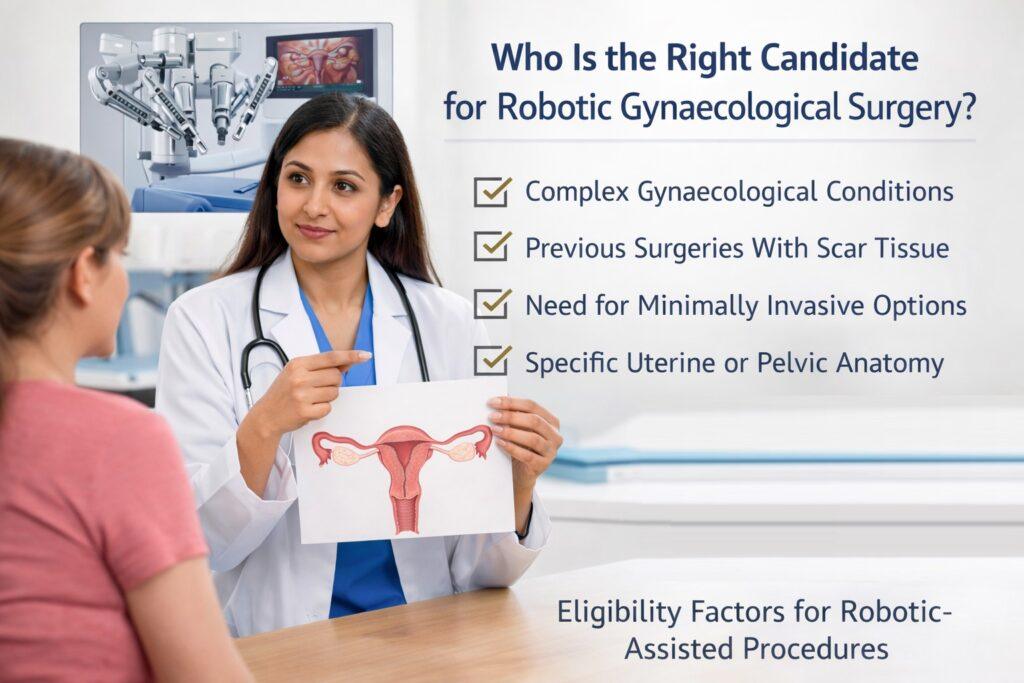
Robotic Gynaecological surgery may be considered for women who meet specific clinical criteria. Suitability depends on multiple factors rather than a single diagnosis.
1. Women With Complex Gynaecological Conditions
Robotic surgery may be evaluated for patients with conditions that require careful surgical precision, such as:
- Complex uterine or Pelvic Pathology
- Conditions involving surrounding tissues
- Recurrent gynaecological problems requiring surgical management
The enhanced visual field and precision can support controlled surgical planning in selected cases.
2. Patients Requiring Minimally Invasive Surgical Options
Women who may benefit from minimally invasive approaches rather than open surgery are sometimes assessed for robotic procedures, particularly when:
- Smaller incisions are preferred
- Faster recovery is a clinical consideration
- Reduced blood loss is important
However, the final decision depends on overall health and surgical feasibility.
3. Women With Previous Abdominal or Pelvic Surgeries
Patients with a History of Previous surgeries may have internal scar tissue (adhesions). In selected situations, robotic surgery may be evaluated due to improved visual access and instrument control.
Each case is reviewed carefully, as prior surgeries can also increase surgical complexity.
4. Patients With Specific Uterine or Pelvic Anatomy
Certain anatomical factors, such as uterine size or pelvic structure, may influence the choice of surgical technique. Robotic assistance may be considered when enhanced manoeuvrability supports surgical safety.
This assessment is always done through imaging and clinical examination.
5. Women Suitable for Planned, Non-Emergency Surgery
Robotic gynaecological surgery is usually planned in advance. Patients undergoing emergency procedures may not be candidates for robotic-assisted techniques.
Preoperative planning plays a key role in determining suitability.
Who May Not Be an Ideal Candidate?
Robotic surgery may not be appropriate for everyone. It may not be recommended in cases involving:
- Certain advanced medical conditions
- Severe cardiopulmonary issues
- Situations where open surgery offers better access
- Emergency surgical requirements
The surgical approach is always chosen based on patient safety rather than technology preference.
Pre-Surgical Evaluation for Robotic Gynaecological Surgery
Before considering robotic surgery, a structured evaluation is performed, which may include:
- Detailed medical history
- Imaging studies
- Laboratory tests
- Review of previous treatments or surgeries
This process helps determine the safest and most effective surgical method.
Benefits of Proper Candidate Selection
When robotic surgery is chosen appropriately, it may support:
- Accurate surgical planning
- Reduced surgical stress on the body
- Controlled postoperative recovery
- Better alignment between treatment goals and outcomes
It is important to note that results vary based on individual health factors and diagnosis.
Role of Specialist Experience in Robotic Surgery
The experience of the surgical team plays a crucial role in Robotic Gynaecological procedures. Surgical expertise ensures that technology is used responsibly and effectively, keeping patient safety at the Centre of care.
Treatment decisions are guided by clinical judgement, evidence-based practices, and individual patient needs.
Gynaecological Robotic Surgery Care in Delhi
In Delhi, robotic gynaecological surgery is offered as part of a structured, patient-focused treatment approach. Care pathways prioritise proper evaluation, informed consent, and personalised surgical planning.
Patients are encouraged to discuss all available treatment options before deciding on any surgical intervention.
Final Thoughts
Robotic gynaecological surgery is a valuable surgical option for selected patients, but it is not a one-size-fits-all solution. Determining the right candidate involves careful assessment, transparent discussion, and individualised planning.
Patients considering robotic surgery should focus on understanding their condition, available options, and the reasoning behind the recommended surgical approach.
