Hysteroscopy is an Advanced yet minimally invasive Gynaecological procedure used to evaluate and treat various uterine conditions. When women are advised Hysteroscopy, one of the most common and understandable concerns is whether the procedure is painful. Fear of pain often leads to anxiety, delayed consultations, or hesitation in undergoing necessary evaluation.
This article explains Hysteroscopy in detail, focusing on pain levels, procedure steps, recovery process, and safety considerations. The aim is to help women understand what to expect and feel more confident about the procedure when it is recommended.
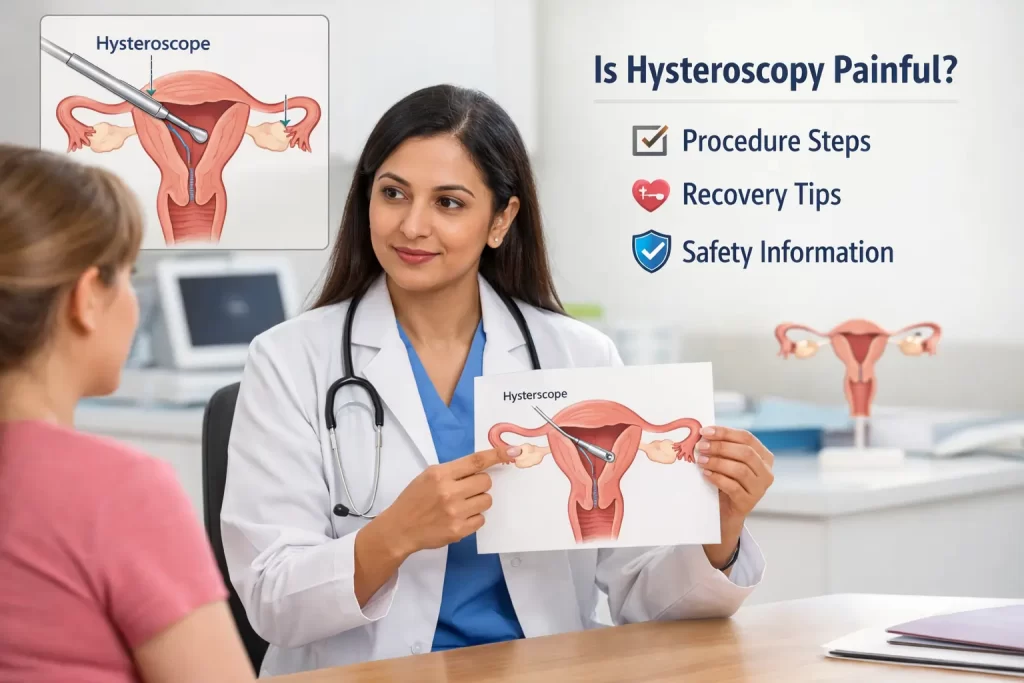
Understanding Hysteroscopy
Hysteroscopy is a procedure that allows direct visualization of the inside of the uterus using a thin, lighted instrument called a hysteroscope. The Hysteroscope is gently introduced through the vagina and cervix into the uterine cavity, eliminating the need for external incisions.
Hysteroscopy is widely used in modern gynaecology because it provides accurate diagnosis and, in many cases, allows treatment to be performed at the same time.
There are two main types of Hysteroscopy-
- Diagnostic hysteroscopy, performed to identify the cause of symptoms
- Operative hysteroscopy, performed to treat identified conditions
Is Hysteroscopy Painful?
For most women, Hysteroscopy is not painful, though some degree of discomfort may be experienced. Pain perception varies from person to person and depends on several factors, including the type of hysteroscopy, individual sensitivity, and whether anaesthesia is used.
Common Sensations During Hysteroscopy
- Mild cramping similar to menstrual pain
- Pressure in the lower abdomen
- Temporary discomfort during insertion
In diagnostic Hysteroscopy, discomfort is usually mild and short-lived. Many women tolerate the procedure well without the need for strong pain relief.
Does Everyone Experience Pain the Same Way?
No. Pain experience varies due to:
- Previous childbirth history
- Cervical sensitivity
- Anxiety or fear before the procedure
- Presence of uterine conditions such as fibroids or adhesions
Women who are anxious may feel discomfort more intensely. Proper counselling and explanation before the procedure play an important role in improving comfort.
Role of Anaesthesia in Hysteroscopy
The use of anaesthesia depends on the purpose of Hysteroscopy.
Diagnostic Hysteroscopy
- Often performed without Anaesthesia
- Mild discomfort only
- Usually completed within a short duration
Operative Hysteroscopy
- May involve local, regional, or General Anesthesia
- Used when removing fibroids, polyps, or scar tissue
- Ensures patient comfort during longer procedures
The choice of anaesthesia is decided after assessing the patient’s condition, medical history, and the complexity of the procedure.
Step-by-Step Hysteroscopy Procedure
1. Pre Procedure Preparation
- Usually scheduled after the menstrual period
- Some patients may be advised medications to relax the cervix
- Fasting may be required if anaesthesia is planned
2. During the Procedure
- The patient is positioned comfortably
- The Hysteroscope is gently passed through the cervix
- A sterile fluid is introduced to expand the uterine cavity
- The uterine lining is examined in detail
- If abnormalities are found, treatment may be performed immediately
3. Duration
- Diagnostic hysteroscopy: approximately 10 to 15 minutes
- Operative hysteroscopy: 30 to 60 minutes, depending on complexity
Recovery After Hysteroscopy
Recovery after Hysteroscopy is generally quick, especially for diagnostic procedures.
Common Post-Procedure Symptoms
- Mild abdominal cramping
- Light vaginal spotting
- Slight pelvic discomfort
These symptoms usually resolve within a short time.
Returning to Normal Activities
- Most women resume daily activities the same day or the next day
- Heavy physical exertion may be avoided briefly
- Sexual activity is usually postponed for a few days as advised
Recovery duration may be longer after operative hysteroscopy but is still shorter compared to traditional surgery.
Is Hysteroscopy Safe?
Hysteroscopy is considered a safe and reliable procedure when performed by experienced specialists.
Safety Advantages
- No external cuts or stitches
- Direct visualization reduces guesswork
- Minimal tissue trauma
- Low complication rate
Possible Risks (Uncommon)
- Infection
- Bleeding
- Uterine perforation
- Reaction to anaesthesia
These risks are rare and are minimized through careful evaluation and proper technique.
When Is Hysteroscopy Recommended?
Hysteroscopy may be advised for women experiencing:
- Abnormal uterine bleeding
- Heavy or irregular periods
- Post-menopausal bleeding
- Infertility or recurrent pregnancy loss
- Suspected uterine polyps or fibroids
- Thickened endometrium
The decision to perform hysteroscopy is made after clinical assessment and other investigations.
Hysteroscopy and Fertility Evaluation
Hysteroscopy plays a valuable role in fertility assessment. It helps identify uterine conditions that may interfere with embryo implantation or pregnancy continuation, such as:
- Polyps
- Submucosal fibroids
- Adhesions
- Congenital uterine anomalies
Correcting these conditions during hysteroscopy may support better reproductive outcomes in selected cases.
When to Contact a Doctor After Hysteroscopy
Medical advice should be sought if the following symptoms occur:
- Severe or persistent pain
- Heavy bleeding
- Fever or chills
- Foul-smelling vaginal discharge
Most women recover smoothly without complications.
Emotional Comfort and Counselling
Apart from physical aspects, Emotional reassurance is equally important. Clear communication, explanation of the procedure, and addressing patient concerns significantly reduce anxiety and improve the overall experience.
Final Thoughts
Hysteroscopy is a minimally invasive and well-tolerated procedure that provides valuable insights into uterine health. While mild discomfort may be experienced, it is usually brief and manageable. With proper evaluation, skilled execution, and appropriate aftercare, Hysteroscopy remains an important tool in gynaecological diagnosis and management.
Understanding the procedure helps women feel empowered and confident in taking timely steps for their reproductive health.
