Radical hysterectomy is one of the main Surgical treatments for Cervical cancer. This procedure goes beyond a standard hysterectomy by removing additional surrounding tissues to ensure complete cancer control and reduce the risk of recurrence. It is most often recommended for women with early stage Cervical Cancer and has been a cornerstone of surgical cancer care for decades.
What Is Radical Hysterectomy?
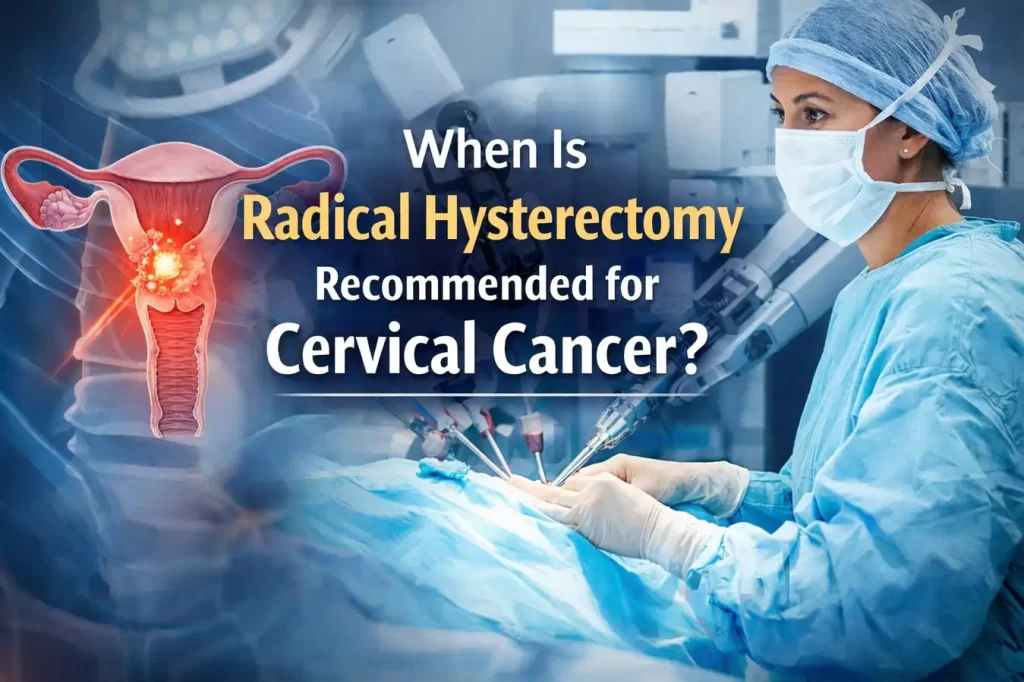
A radical hysterectomy involves removal of
- The uterus and cervix
- The upper part of the vagina
- Parametrium (tissues around the cervix)
- In many cases, pelvic lymph nodes
In contrast to a simple Hysterectomy, this surgery targets tissues that may harbour microscopic cancer spread. The primary goal is to eliminate the tumour and achieve clear margins while reducing the likelihood of cancer recurrence.Cancer.gov
When Is It Recommended?
1. Early‑Stage Cervical Cancer
Radical hysterectomy is most commonly recommended for women diagnosed with Stage IB1, IB2, or selected Stage IIA cervical cancers — where the tumour is present but has not widely spread beyond the pelvis.Cancer Research UK
These stages usually mean the cancer is still confined to the cervix or nearby tissue, making surgical removal an appropriate first‑line option.
2. No Distant Metastasis
Before recommending surgery, doctors confirm that the cancer has not spread to distant organs (like lungs or liver). Imaging and other tests are used to rule out metastatic disease.
How Radical Hysterectomy Works
Radical hysterectomy can be performed through different surgical approaches, depending on patient factors and surgeon expertise:
- Open abdominal surgery – through a traditional incision
- Minimally invasive surgery (laparoscopy or robotic‑assisted) – smaller incisions, quicker recovery
- Vaginal approach – less common, used selectively in specialized centres
Each approach has advantages and considerations. For example, open surgery has been the gold standard because of strong cancer control outcomes, while minimally invasive techniques may offer shorter recovery in select cases.PubMed+1
Who Should Consider This Surgery?
Radical hysterectomy is typically recommended for women who:
- Have a confirmed diagnosis of cervical cancer in suitable early stages
- Are medically fit to undergo major surgery
- Have undergone complete evaluation through imaging and lab tests
- Want a definitive surgical approach to remove tumour tissue
It is important to discuss individual case details with an experienced gynecologic oncologist who can assess tumour characteristics, patient health, and surgical risks before making a recommendation.
What to Expect During the Procedure
The basic steps of a radical hysterectomy include:
- Anesthesia: You will receive general anesthesia before the surgery begins.
- Tumour removal: The uterus, cervix, portions of the vagina, and surrounding tissues are carefully removed.
- Lymph node evaluation: Pelvic lymph nodes are often removed and examined to check for spread.
- Completion: Surgical closure and monitoring in recovery.
The entire surgery can take several hours, and the choice of technique (open vs minimally invasive) depends on tumour size, patient anatomy, and the surgeon’s experience.
Recovery and Aftercare
Hospital Stay
Most women stay in the hospital for 2–5 days post‑surgery, depending on the type of procedure and overall health.
Full Recovery
Complete recovery usually takes 6–8 weeks, during which time activity increases gradually. Pain management, wound care, and monitoring for complications are essential parts of postoperative care.
Follow‑Up Care
Regular follow‑up is critical to monitor healing and check for signs of recurrence. This often involves clinical exams and imaging at scheduled intervals.
Benefits of Radical Hysterectomy
Women who undergo this surgery may experience:
- Effective removal of cancerous tissue
- Reduced risk of recurrence for appropriate stages
- Accurate staging through lymph node evaluation
- Clear treatment pathway when combined with follow‑up care
Risks and Considerations
As with any major surgery, radical hysterectomy carries potential risks — although serious complications are relatively uncommon in experienced hands:
- Bleeding and infection
- Injury to nearby organs like bladder or ureters
- Lymphatic fluid buildup (lymphedema)
- Longer recovery period compared to simple hysterectomy
- This procedure results in loss of fertility and ends the possibility of future pregnancy. WCI
Alternative and Adjunct Treatments
Surgery isn’t the only option – treatment may involve or be replaced by:
- Chemoradiation: Often recommended for more advanced stages or when surgery isn’t ideal
- Simple hysterectomy: Sometimes considered in very early, low‑risk cases
- Fertility‑sparing approaches: Such as radical trachelectomy for select patients under specific conditions Cancer.gov
FAQs
Q1. Can radical hysterectomy be done laparoscopically?
Yes, in selected patients, minimally invasive approaches can be offered, though open surgery remains the preferred approach in many centres due to strong cancer control evidence.PubMed
Q2. How long is recovery after surgery?
Most patients return to normal routines within about 6–8 weeks post‑surgery.
Q3. Does this surgery affect fertility?
Yes. Radical hysterectomy removes the uterus, so pregnancy is no longer possible. Patients desiring fertility preservation should discuss alternate procedures with their doctor.
Q4. Will I need radiation or chemo after surgery?
This depends on final pathology results. Your care team will advise on any additional therapy needed.
Q5. Are lymph nodes always removed?
Pelvic lymph node evaluation is commonly part of the surgery to assess cancer spread and guide further treatment.
Final Thoughts
A radical hysterectomy is a key surgical option for women with appropriate stages of cervical cancer. Its role in removing cancerous tissue and improving long‑term outcomes makes it an indispensable part of comprehensive gynecologic oncology care.gyneonco.com
To learn more about your treatment options or to schedule a consultation with experienced specialists, explore our detailed service page on Radical Hysterectomy for Cervical Cancer.
