Hearing terms like Ovarian cyst or Ovarian cancer can be frightening for many women. Because both conditions involve the ovaries, they are often confused with each other. This confusion sometimes leads to unnecessary fear, delayed consultation, or incorrect assumptions about treatment. Understanding the difference between an ovarian cyst and ovarian cancer is important for making informed health decisions.
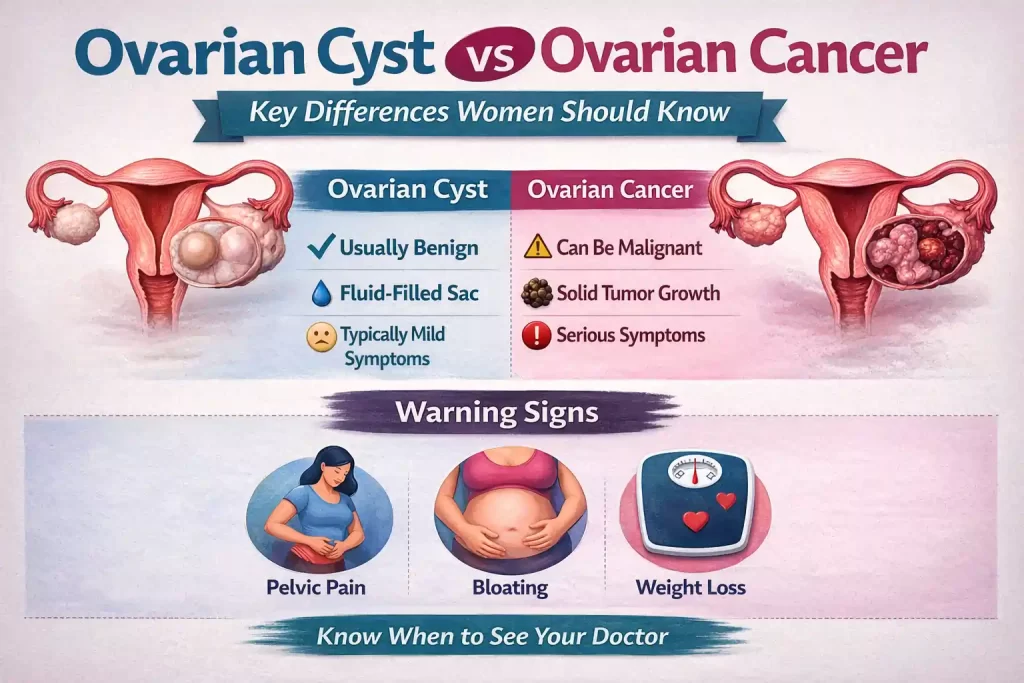
In this article, we tell you about the difference between ovarian cyst vs ovarian cancer in simple language, focusing on their nature, symptoms, diagnosis, and management-without making any medical claims.
Understanding the Ovaries
The ovaries are two small organs located on either side of the uterus. They play an essential role in:
- Producing eggs (ova)
- Releasing hormones such as estrogen and progesterone
Both ovarian cysts and ovarian cancer develop in or around the ovaries, but they are very different conditions.
What Is an Ovarian Cyst?
An ovarian cyst is a fluid-filled sac that forms on or inside an ovary. Ovarian cysts are very common, especially in women of reproductive age.
Key Points About Ovarian Cysts–
- Most ovarian cysts are benign (non-cancerous)
- Many cysts develop as part of the normal menstrual cycle
- They often disappear on their own within a few months
- Some cysts may cause pain or discomfort, while others cause no symptoms at all
Common types of ovarian cysts include functional cysts, dermoid cysts, and endometriomas.
What Is Ovarian Cancer?
Ovarian cancer occurs when abnormal cells grow uncontrollably in the ovary. Unlike cysts, ovarian cancer is a serious condition that requires careful medical evaluation and long term management.
Key Points About Ovarian Cancer–
- It is not common, but it can be serious
- More likely to occur after menopause, though it can affect younger women
- Often detected at a later stage because early symptoms can be vague
- Requires specialized treatment and long-term follow-up
Ovarian Cyst vs Ovarian Cancer: The Main Difference
The most important difference between ovarian cysts and ovarian cancer lies in their nature and behavior.
| Feature | Ovarian Cyst | Ovarian Cancer |
| Nature | Usually benign | Malignant |
| Commonality | Very common | Relatively rare |
| Growth | Often temporary | Progressive |
| Treatment | Observation or surgery | Medical + surgical care |
| Risk | Usually low | Requires careful monitoring |
Difference in Symptoms
Symptoms of Ovarian Cysts
Many ovarian cysts cause no symptoms. When symptoms occur, they may include:
- Mild to moderate pelvic pain
- Bloating
- Pain during periods
- Irregular menstrual cycles
- Pain during physical activity
Symptoms are often sudden and related to cyst size or rupture.
Symptoms of Ovarian Cancer
Symptoms of ovarian cancer are often subtle and persistent. They may include:
- Continuous abdominal bloating
- Loss of appetite or feeling full quickly
- Persistent pelvic or abdominal discomfort
- Unexplained weight changes
- Changes in bowel or bladder habits
These symptoms usually do not go away and may gradually worsen over time.
How Growth Patterns Differ
Ovarian Cyst Growth
- Cysts may grow and shrink with menstrual cycles
- Many resolve without treatment
- Growth is usually slow and predictable
Ovarian Cancer Growth
- Cancerous cells grow continuously
- Growth does not depend on menstrual cycles
- May spread to nearby tissues if untreated
Diagnosis- How Doctors Differentiate Between the Two
Doctors use a combination of tools to differentiate ovarian cysts from ovarian cancer-
Diagnostic Tools Include:
- Ultrasound imaging
- Blood tests (when required)
- Physical examination
- Monitoring cyst changes over time
In many cases, doctors recommend observation and follow-up scans before deciding on further steps.
Age and Risk Factors
Ovarian Cysts
- Common in women aged 15-45
- Often linked to hormonal changes
- Can occur at any age
Ovarian Cancer
- More common after age 50
- Risk increases after menopause
- Family history may increase risk
Treatment Approach- How It Differs
Managing Ovarian Cysts
Treatment depends on-
- Size of the cyst
- Symptoms
- Age and menstrual status
Options may include:
- Observation
- Follow-up scans
- Surgery in selected cases
If surgery is required, ovarian cyst surgery in Delhi is commonly performed using minimally invasive techniques for faster recovery.
Managing Ovarian Cancer
Ovarian cancer management is more complex and may involve:
- Surgical evaluation
- Long-term medical treatment
- Ongoing monitoring
Treatment plans are individualized and depend on many factors.
Emotional Impact and Fear
One of the biggest challenges women face is fear due to confusion. Many women assume that every ovarian cyst means cancer, which is not true.
Understanding the difference helps:
- Reduce anxiety
- Encourage timely medical consultation
- Prevent unnecessary panic
When Should You Seek Medical Advice?
It is important to consult a healthcare professional if you experience:
- Persistent pelvic pain
- Continuous bloating
- Sudden severe abdominal pain
- Irregular periods for a long time
- Rapid abdominal swelling
Early evaluation helps clarify the condition and guide appropriate care.
Why Awareness Matters
Knowing the difference between ovarian cysts and ovarian cancer empowers women to:
- Ask the right questions
- Understand medical advice better
- Avoid misinformation from unreliable sources
Awareness plays a key role in protecting both physical and mental well-being.
Final Thoughts
Understanding ovarian cyst vs ovarian cancer is essential for women’s health awareness. While ovarian cysts are usually benign and common, ovarian cancer is a serious condition that requires careful evaluation. Both conditions involve the ovaries, but their causes, progression, and management are very different.
Most ovarian cysts are not dangerous, and many resolve without treatment. However, persistent symptoms should never be ignored. Early consultation and proper evaluation help ensure the best possible outcomes while avoiding unnecessary fear.
