Uterine fibroids are one of the most common Gynecological conditions seen in women of Reproductive age. Many women live with fibroids for years without any serious issues. But a common and important question patients ask is:
When does Fibroid size Become Dangerous?
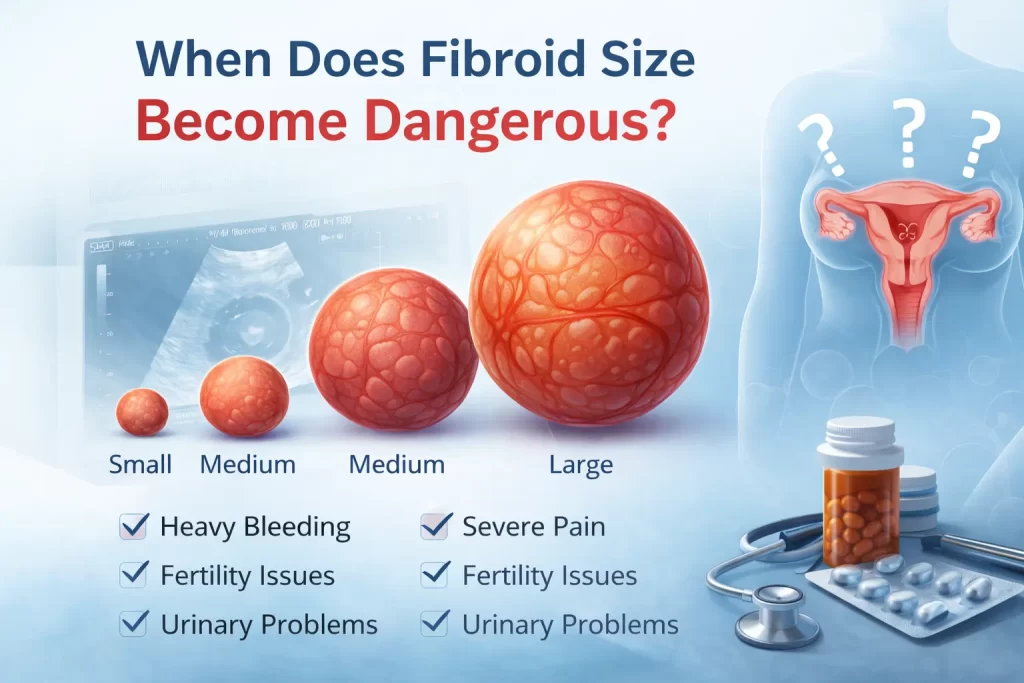
The truth is, fibroids are not dangerous just because they exist. its risk depends on size, location, symptoms, and how the fibroid affects daily life and overall health. Let’s understand this simply and practically.
Understanding Fibroid Size
Fibroids are measured in CM (centimeters) during ultrasound or MRI scans. Doctors generally classify them as:
- Small fibroids: When Size is Less than 3 cm
- Medium fibroids: Between 3-6 cm
- Large fibroids: More than 6 cm
Some fibroids can grow beyond 8-10 cm, which increases the chances of complications.
When Does Fibroid Size Become a Problem?
A fibroid becomes concerning when it starts causing symptoms or health issues, not just because of its size.
1. Heavy or Prolonged Menstrual Bleeding
Large fibroids often cause:
- Periods lasting more than 7 days
- Very heavy flow with blood clots
- Fatigue, dizziness, or anemia
If your Hemoglobin level continues to fall, the fibroid size and its effect on the uterus require medical attention.
2. Pelvic Pain or Pressure
if your fibroids are larger than 5-6 cm may press on nearby organs, leading to:
- Constant lower abdominal pain
- Pelvic pressure or heaviness
- Lower back pain
- Pain during intercourse
Pain that affects daily routine should never be ignored.
3. Urinary or Bowel Problems
As fibroids grow, they can press on surrounding organs:
- Bladder pressure: frequent urination or difficulty emptying the bladder
- Bowel pressure: constipation or discomfort during bowel movements
These symptoms usually indicate a fibroid of significant size.
4. Rapid Growth of Fibroids
Fibroids usually grow slowly. If a fibroid increases in size very quickly, doctors may recommend further tests to rule out rare conditions and decide on timely treatment.
5. Fertility and Pregnancy Issues
Fibroids can become dangerous when they:
- Distort the uterine cavity
- Block fallopian tubes
- Increase the risk of miscarriage
Even smaller fibroids inside the uterus (submucosal fibroids) can affect fertility, while large fibroids may cause complications during pregnancy.
Is There a Specific Size That Is Always Dangerous?
No. There is no fixed size that is dangerous for everyone.
- A 4 cm fibroid inside the uterus can cause severe bleeding
- An 8 cm fibroid outside the uterus may cause no symptoms
This is the main Reason why doctors focus more on symptoms and location, not just size.
Fibroid Size and Possible Risks
| Fibroid Size | Possible Effects |
| Below 3 cm | Usually harmless, observation advised |
| 3-5 cm | May cause bleeding or mild pain |
| 6-8 cm | Pressure symptoms, anemia risk |
| Above 8 cm | Higher chance of surgical treatment |
When Should You See a Doctor?
You should consult a Gynecologists’ if you are experiencing:
- Heavy or prolonged periods
- Persistent pelvic pain
- Difficulty getting pregnant
- Frequent urination or constipation
- Symptoms of anemia like fatigue or weakness
Early diagnosis helps prevent complications and offers more treatment options.
Can Fibroids Be Dangerous If Left Untreated?
In some cases, yes. Untreated large fibroids can lead to:
- Severe anemia
- Chronic pelvic pain
- Urinary or bowel problems
- Pregnancy complications
However, not in all conditions do you have to go for fibroids surgery. Many women can be managed with monitoring and indications for minimally invasive procedures.
Treatment Options Based on Fibroid Size
Treatment depends on size, symptoms, age, and future pregnancy plans.
- Small fibroids: Regular follow-up
- Medium fibroids: Medicines or minimally invasive treatments
- Large fibroids: Laparoscopic or robotic surgery may be recommended
Modern treatment options allow faster recovery with minimal scarring.
Final Thoughts
Fibroid size becomes dangerous only when it starts affecting your health or quality of life. Size alone is not the deciding factor. If you have symptoms like heavy bleeding, pain, or fertility problems, timely medical evaluation is important.
Early consultation helps choose the safest and most effective treatment plan.
If you are experiencing Fibroids and Menstrual Problems, consulting a gynaecologist can help you understand the best options for your individual condition.
