Fibroids are one of the most common gynecological conditions affecting women, often causing heavy bleeding, pelvic pain, and even challenges with fertility. For many, surgery becomes necessary when symptoms start to interfere with daily life. But after the operation, it’s normal to wonder: what changes should I expect? How will my hormones, fertility, and lifestyle be affected?
Here we will talk about what happens after fibroid surgery which will help you plan recovery, regain balance, and feel more confident about your health.
Understanding Fibroid Surgery
Fibroid surgery is not one-size-fits-all. The approach depends on the size, number, and location of the fibroids. Today, minimally invasive techniques like laparoscopic myomectomy and hysteroscopic surgery are preferred because they involve smaller cuts, faster recovery, and fewer complications.
These procedures fall under minimally invasive gynecology, which has completely changed how fibroid treatments are performed. Women undergoing these surgeries often notice less pain, quicker hospital discharge, and a faster return to their normal routines compared to traditional open surgery.
Hormonal Changes After Fibroid Removal
Many women worry about hormonal changes after fibroid removal. The reassuring fact is that fibroids themselves do not produce hormones. So, for most women, long-term hormonal imbalances do not occur.
That said, it’s common to notice temporary changes in the first few weeks:
- Irregular or lighter periods
- Slight changes in flow
- Mood fluctuations
These shifts are usually short-term as the body adjusts. To support hormonal health after surgery, you can:
- Track your menstrual cycle and note changes
- Follow a diet to manage hormones after fibroid surgery, including iron-rich foods, whole grains, healthy fats, and phytoestrogens
- Consult best gynecologist in Delhi if you feel persistent changes or need guidance on supplements or temporary hormonal therapy
Fertility Tips Post Myomectomy
For women planning pregnancy, fertility is often the top concern. A myomectomy removes fibroids while preserving the uterus, allowing natural conception for many patients. A laparoscopic surgeon in Delhi can even improve fertility since fibroids may interfere with implantation or cause recurrent miscarriages.
Fertility tips post myomectomy
- Wait a few months before conceiving: Usually 3–6 months to allow complete uterine healing.
- Regular follow-ups: Ultrasounds help confirm that the uterus has healed properly.
- Healthy lifestyle: Balanced diet, exercise, and stress management support reproductive health.
- Consult your gynecologist: Personalized guidance ensures safe conception planning.
Hysterectomy and Reproductive Health
Sometimes, fibroids are large, recurrent, or cause severe symptoms that cannot be managed otherwise. In such cases, a hysterectomy-removal of the uterus-may be recommended. While this resolves fibroid-related symptoms permanently, it also ends fertility.
For women who have completed their families, a hysterectomy can bring immense relief from pain, heavy bleeding, and discomfort. Emotional support is equally important. Experienced surgeons, like Dr. Buchun Mishra, Director – Gynae Oncology at Action Cancer Hospital, New Delhi, can guide patients in making informed decisions between fertility-preserving options and hysterectomy, offering compassionate care throughout the process.
Role of Minimally Invasive Surgeries
Advances in surgical technology have made fibroid surgery smoother than ever. Laparoscopic and robotic procedures offer:
- Smaller incisions and reduced pain
- Minimal blood loss
- Shorter hospital stays
- Preservation of reproductive organs for women planning pregnancy
- Faster return to normal activities
These modern techniques not only protect reproductive health but also make recovery faster and safer.
Fibroid Surgery Recovery Timeline
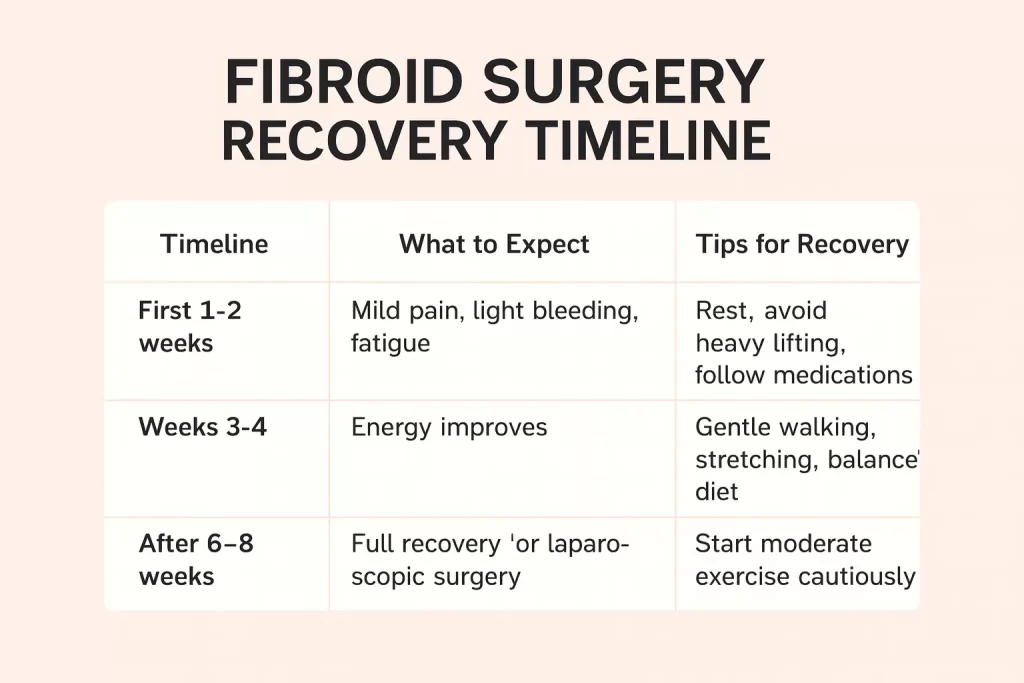
Recovery depends on the type of surgery. Here’s a practical guideline:
| Timeline | What to Expect | Tips for Recovery |
| First 1–2 weeks | Mild pain, light bleeding, fatigue | Rest, avoid heavy lifting, follow medications |
| Weeks 3–4 | Energy improves | Gentle walking, stretching, balanced diet |
| Weeks 5–6 | Resume most activities | Start moderate exercise cautiously |
| After 6–8 weeks | Full recovery for laparoscopic surgery | Consider fertility planning if desired |
Exercise After Fibroid Surgery
Exercise after fibroid surgery supports faster healing, improves circulation, and helps maintain overall health.
- Weeks 1–2: Light walking and gentle stretching
- Weeks 3–4: Add low-impact exercises like yoga or swimming
- Weeks 5–6: Resume moderate workouts; avoid heavy lifting until cleared
- Long-term: Regular exercise helps maintain hormonal balance, healthy weight, and reduces fibroid recurrence
Diet to Manage Hormones After Fibroid Surgery
Nutrition plays a key role in recovery and hormone regulation. A diet to manage hormones after fibroid surgery should include:
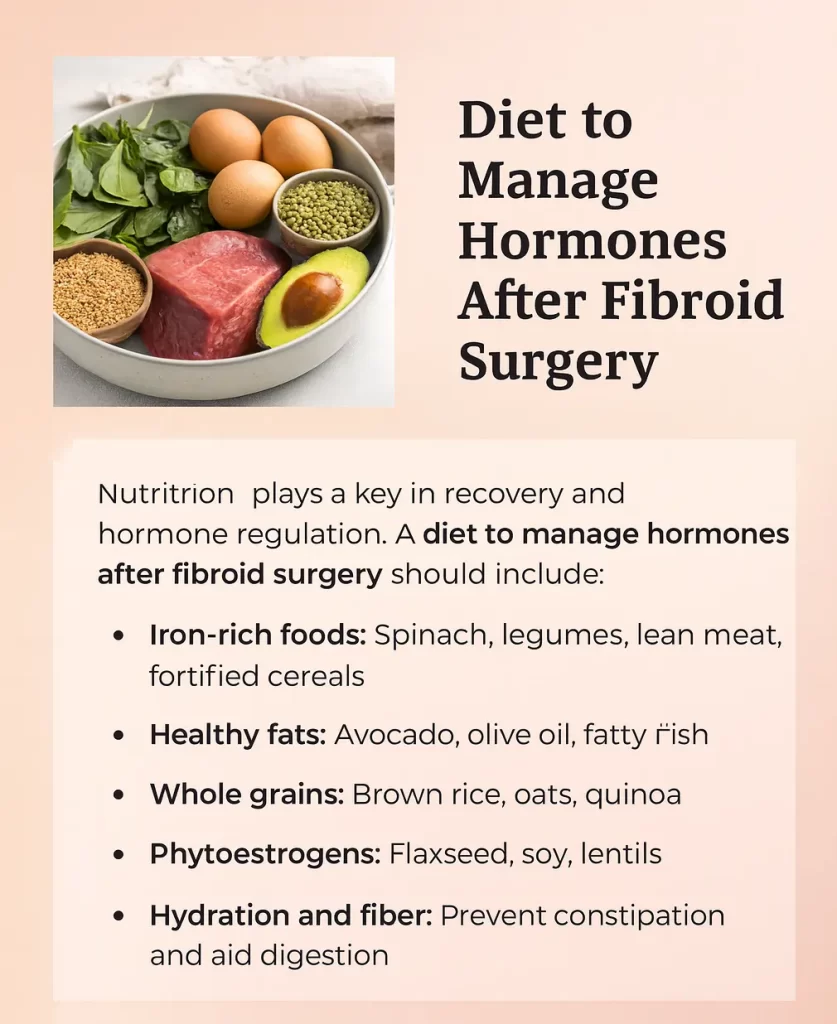
- Iron-rich foods: Spinach, legumes, lean meat, fortified cereals
- Healthy fats: Avocado, olive oil, fatty fish
- Whole grains: Brown rice, oats, quinoa
- Phytoestrogens: Flaxseed, soy, lentils
- Hydration and fiber: Prevent constipation and aid digestion
Emotional and Lifestyle Adjustments
Recovery is not only physical-emotional well-being matters too. Relief from heavy bleeding and pelvic pain can boost confidence, while anxiety about fertility or hormonal changes may still occur.
Tips for emotional recovery:
- Practice stress management through meditation or yoga
- Maintain a balanced diet and healthy weight
- Follow all medical advice regarding medications, supplements, and activity restrictions
- Stay connected with support groups or trusted healthcare providers
When to Seek Medical Advice
Follow-up care is essential. Contact best gynecologist in Delhi if you notice:
- Persistent pain or unusual bleeding
- Irregular cycles beyond a few weeks
- Difficulty conceiving after myomectomy
Regular check-ups and ultrasounds ensure proper healing and early detection of any recurrence.
Life after fibroid surgery involves physical recovery, hormonal adjustments, and emotional care. By following a fibroid surgery recovery timeline, maintaining a hormone-friendly diet, exercising appropriately, and following fertility tips post myomectomy, women can restore health and confidence. Modern minimally invasive procedures, such as the Best laparoscopic surgeon in Delhi like Dr Buchun Mishra, make recovery smoother and safer, helping women return to their best selves quickly
When to Seek Medical Guidance
Follow-up care is critical for long-term well-being. Patients should not ignore persistent symptoms such as unusual pain, cycle disturbances, or difficulty conceiving after surgery. Scheduling periodic consultations with the best gynecologist in Delhi ensures ongoing monitoring and early detection if new fibroids develop. Women considering pregnancy should undergo ultrasound evaluations before trying to conceive, as this helps confirm that the uterus has healed properly.
Frequently Asked Questions
Q. Does fibroid surgery affect fertility?
Yes, but in most cases, the effect is positive. After myomectomy, fertility often improves, while hysterectomy permanently ends fertility.
Q. Can fibroids return after surgery?
Yes, fibroids may recur, especially in younger women. Regular follow-ups help manage them early if they reappear.
Q. How long does recovery take after minimally invasive fibroid surgery?
Most women recover within 2-4 weeks after laparoscopic or robotic procedures, while open surgery may take 6-8 weeks.
Conclusion
Life after fibroid surgery brings new possibilities for women who have struggled with painful symptoms, heavy bleeding, or fertility issues. With proper follow-up care, hormonal health can be stabilized and reproductive options carefully managed. Whether through myomectomy, hysterectomy, or advanced minimally invasive techniques, choosing experienced specialists ensures safer outcomes and faster recovery.
If you are seeking expert care, consult Dr. Buchun Mishra at Action Cancer Hospital, Paschim Vihar, New Delhi. With more than 19 years of experience in gynecologic oncology and advanced surgeries, he provides compassionate, personalized solutions to help women move forward with confidence.
