When a woman first hears that she has an ovarian cyst, the first thought that quietly comes to her mind is – “Will I still be able to become a mother?”
And when surgery is suggested, the worry becomes stronger – “What will happen to my fertility after the operation or What about my fertility after cyst removal?”

In real life, the situation is often much better than what many online searches make it look like. In most women, fertility stays normal or even improves after ovarian cyst surgery, especially when the cyst was stopping proper ovulation or disturbing hormones.
Dr Buchun Mishra, Director, The Best Gynae Laparoscopic Surgeon in Delhi, with over 19 years of experience, often tells her patients:
“Removing the cyst is not the end of fertility. For many women, it is actually the start of normal ovulation.”
This guide explains everything in a simple and stress-free way- fertility after surgery, how the ovary heals, natural pregnancy chances, how to prevent cysts from coming back, and simple diet tips for recovery.
Understanding Ovarian Cysts in Simple Words
An ovarian cyst is a small, fluid-filled sac that forms on or inside the ovary. Many women get such cysts at some point in life without even knowing it. In most cases, these cysts go away on their own within a few months.
Common types of ovarian cysts include:
- Functional cysts
- PCOS-related cysts
- Chocolate cysts (endometriomas)
- Dermoid cysts
The most important thing to remember is:
Having an ovarian cyst does not mean you cannot get pregnant.
Fertility Changes After Ovarian Cyst Surgery Or Removal- What Really Happens
Many women fear that surgery on the ovary will spoil their chances of pregnancy. In real medical practice, this fear is often not true.
Dr. Buchun Mishra (best gynecologist in Delhi) explains that many women who earlier had trouble getting pregnant due to blocked ovulation or hormone problems start ovulating normally after the cyst is removed. Once the pressure of the cyst is gone, the ovary often starts working in a healthy way again.
Fertility after ovarian cyst surgery depends on things like:
- The size and type of the cyst
- Whether one ovary or both were affected
- The type of surgery done
- The woman’s age
- Problems like PCOS or endometriosis
Today, most surgeries are done through laparoscopy, which causes very little damage to healthy ovary tissue. This is why natural pregnancy after ovarian cyst removal is quite common now.
How the Ovary Heals After Surgery
The outer wound may heal in about two weeks, but the ovary needs several months to heal from inside. This inner healing is very important for future pregnancy.
Usually, recovery looks like this:
- First 1 to 2 months: Hormones slowly start settling
- By 3 months: Periods and ovulation become more regular
- By 5 to 6 months: The ovary is mostly back to normal working
Good signs of healing include:
- Periods becoming regular
- Less lower-abdominal pain
- Healthy eggs seen on ultrasound
- Better hormone reports
Dr. Mishra often advises women not to rush the process, because too much stress can delay ovulation even after successful surgery.
Natural Pregnancy After Ovarian Cyst Removal
This is the most common and most emotional question –Can I get pregnant naturally after surgery?
In many cases, the answer is yes.
Natural pregnancy after ovarian cyst removal is more likely when:
- The cyst was non-cancerous
- At least one ovary is healthy
- The fallopian tubes are open
- Hormone levels are fairly normal
Most doctors suggest waiting 2–3 proper periods before trying for pregnancy so that the ovary gets enough time to heal. If pregnancy does not happen even after 9–12 months of regular trying, then a fertility test may be suggested.
How to Prevent Ovarian Cysts From Coming Back
Surgery removes the present cyst, but new cysts can still form if the main hormone problems are not controlled.
Common reasons why cysts return include
- PCOS
- Thyroid problems
- Weight gain
- Sugar-related problems
- Long-term stress
To reduce the chance of cysts coming back:
- Go for regular ultrasound check-ups
- Follow doctor-guided hormone treatment if needed
- Keep your weight in control
- Sleep well and manage stress
Dr. Buchun Mishra often notices that women who change their lifestyle after surgery have fewer repeat cyst problems than those who do not.
Ovarian Cyst Diet Tips for Recovery and Fertility
Food plays an important role in healing and hormone balance after surgery. A healthy diet helps the body recover faster and supports normal ovulation.
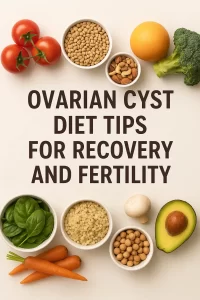
A good recovery diet includes:
- Fresh fruits and vegetables
- Green leafy vegetables
- Whole grains
- Dal and pulses
- Eggs, paneer, fish
- Nuts and seeds
- Small amount of healthy fats
Foods to Avoid With Ovarian Cysts
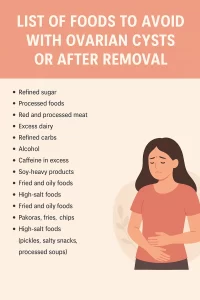
Foods to Avoid With Ovarian Cysts or After Removal When you are dealing with ovarian cysts or recovering after cyst removal, your diet plays a vital role in protecting hormonal balance and reducing discomfort. Here we share a List of foods to avoid with ovarian cysts or when recovering after cyst removal. Avoiding these items supports healing, stabilises hormones, and reduces stress on your reproductive system.
List of foods to avoid with ovarian cysts or After Removal
- Refined sugar (cakes, pastries, chocolates, sweetened drinks)
- Processed foods (packaged snacks, instant noodles, fast food)
- Red and processed meat (sausages, bacon, deep-fried meat)
- Excess dairy (cheese, full-fat milk, cream)
- Refined carbs (white bread, white rice, pasta)
- Alcohol (increases inflammation & hormonal imbalance)
- Caffeine in excess (coffee, energy drinks)
- Soy-heavy products (excess soy milk, tofu- may influence estrogen)
- Fried and oily foods (pakoras, fries, chips)
- High-salt foods (pickles, salty snacks, processed soups)
Many women feel better and notice regular periods sooner when they follow a clean and simple diet after ovarian cyst surgery.
When Is Ovarian Cyst Surgery Actually Needed?
Not all cysts need surgery. Many go away on their own.
Surgery is usually needed only when:
- The cyst becomes very large
- It causes continuous pain
- There is risk of bursting or twisting
- It keeps coming back again and again
- Fertility is being affected
- There is doubt of cancer
In good hospitals, including some centres in cities like Delhi, laparoscopic surgery by best gynecologic oncologist in Delhi is now commonly used because it is safer, faster, and better for fertility.
Emotional Health Is Also Important
The mind and body are connected. Fear of surgery, pressure to conceive, and worry about future health can affect hormone balance.
Dr. Mishra often sees that women who receive emotional support from family and proper guidance from doctors recover faster. Talking openly, sharing fear, and taking counselling when needed can make recovery smoother.
The Simple Truth About Ovarian Cysts and Fertility
Ovarian cysts are common. Fertility problems due to cysts are not always permanent. With the right care:
- Fertility can become normal again
- Natural pregnancy is possible
- Cysts can be controlled
- The ovaries can recover well
What matters most is early check-up, correct surgery, a healthy lifestyle, peace of mind, and regular follow-ups. With proper medical care, most women are able to live a normal life and plan pregnancy after ovarian cyst surgery.
Frequently Asked Questions – Ovarian Cysts & Fertility
1. What are the chances of getting pregnant after ovarian cyst surgery?
In most women, the chances are good, especially when the cyst is non-cancerous and removed through laparoscopy. Many women start ovulating normally after surgery.
2. How long does ovarian recovery take after surgery?
Hormone balance usually starts improving in 2–3 months, and full internal healing may take 4–6 months.
3. Is natural pregnancy possible after ovarian cyst removal?
Yes, natural pregnancy is quite common when healthy ovary tissue is saved and hormones become stable.
4. What increases pregnancy chances after surgery?
A healthy ovary, open tubes, balanced hormones, a good diet, and low stress all help. Regular doctor visits also matter.
5. Can ovarian cysts come back after surgery?
Yes, they can, mainly due to hormone problems. But the risk can be reduced with a healthy lifestyle, regular scans, and proper treatment.
6. What is the best diet after ovarian cyst surgery?
Eat fresh vegetables, fruits, grains, protein foods, and avoid junk, fried food, and too much sugar.
7. When is surgery really needed for ovarian cysts?
Surgery is needed when the cyst is large, painful, keeps returning, affects fertility, or looks suspicious.
8. Does surgery reduce egg count?
With modern laparoscopy, egg count is usually protected. In some cases, fertility even improves.
9. When can one try for pregnancy after surgery?
Most doctors suggest waiting for 2–3 normal periods.
10. Can stress affect fertility after surgery?
Yes. Too much stress can disturb hormones and delay pregnancy. Emotional support helps a lot.
Next Steps for a Healthy Pregnancy Journey
Ovarian cyst removal is safe and effective, especially when done using minimally invasive surgery in gynaecology or advanced robotic surgery in gynaecology techniques. Choosing the right expert is crucial-one who has the skills to remove cysts while safeguarding reproductive health. For women in Delhi, consulting Dr. Buchun Mishra at Action Cancer Hospital, Paschim Vihar, provides access to advanced laparoscopic techniques and compassionate care. Overall, fertility after cyst removal remains reassuring for most women. With expert surgical care and proper follow-up, many women conceive naturally without needing advanced fertility treatments.
